A flat tire creates instant pressure to act fast. Before buying K7 Forged alloy wheels, our customers had regular wheels that suffered from scored rims, cracked flanges, and corroded bead seats, almost all from decisions made in the first minutes after the tire went flat. Below is what happens during a puncture, and what mistakes make it worse.
Key highlights
- Driving a few hundred meters on a fully flat tire can permanently crack or gouge an alloy wheel rim; stopping immediately is the only right move.
- Emergency foam sealants react with the aluminium bead seat, accelerating corrosion and disrupting TPMS sensors on your alloy wheels.
- Wrong jack placement during a roadside tire change can bend the rocker panel or suspension arm, adding expensive structural damage to a simple flat.
- Impact cracks from flat, driving rim contact are invisible to the eye but grow under load, so professional wheel inspection after every flat event is non-negotiable.
- Forged 6061-T6 alloy wheels resist rim cracking and bead seat damage far better than cast wheels, thanks to a denser and more uniform grain structure.
What happens to your alloy wheel when you drive on a flat tire
Air pressure keeps the sidewall rigid. Without it, the sidewall collapses, and the rim flange drops onto the road under full vehicle weight. The tire bead detaches from its seat under lateral force when deflated, exposing the rim directly to the road.
Our recommendation sets the safe distance at a few hundred feet at walking speed. Beyond a quarter mile, alloy rim cracking becomes likely. Beyond one mile, the rim is usually beyond repair. At highway speed, those distances compress to seconds. Aluminium alloy has no fatigue endurance limit, and repeated stress at any level will grow a crack. A rim that took flat-driving impact cannot return to service without professional inspection.
Mistake 1: Using emergency foam sealant as a real repair
Aerosol sealants are synthetic polymer compounds that coat the aluminium bead seat when injected through the valve stem. The compound reacts with the alloy surface and accelerates corrosion at exactly the zone where the tire seals. BMW and Mercedes both advise against sealant use on alloy wheels for this reason. Sealant also coats TPMS sensors and complicates tire dismounting at the shop. Use it only to reach safety, then have the bead seat cleaned and the wheel inspected.
Mistake 2: Placing the floor jack on the wrong point
Every car has four designated jack points along the reinforced frame or pinch weld, shown in the owner’s manual. Jacking from the suspension arm, sill panel, or exhaust transfers weight through body sections with no load capacity, creating damage unrelated to the original flat. Place wheel chocks against the opposing tires, engage the parking brake, and lift slowly. After fitting the spare, torque lug nuts in a star pattern to the manufacturer’s specification. Our article on the hidden dangers of wheel spacers explains how similar unintended load paths compound structural damage over time.
Mistake 3: Not inspecting the wheel after the flat
A rim that looks undamaged may carry a hairline crack at the flange or bead seat. Published fatigue analysis of aluminium alloy wheel rims confirms cracks grow from stress concentrations, including spoke holes and flange edges, under cyclic loading. A wheel with a hidden impact crack fails without warning at speed. Take any wheels in Dubai that ran flat to a qualified technician for dye penetrant testing before returning it to service.
Mistake 4: Ignoring the slow pressure loss that led to the flat
Most flat wheels follow weeks of slow pressure loss from bead seat corrosion, a deteriorating valve stem, or a tread puncture. Bead seat corrosion pits the aluminium surface and prevents the tire bead from sealing fully. Once moisture enters that gap, oxidation accelerates fast. Check tire pressure weekly and read our guide on what to know before buying new wheels for wheel and tire compatibility factors that reduce bead seat failure risk.
Why forged alloy wheels handle a flat tire better
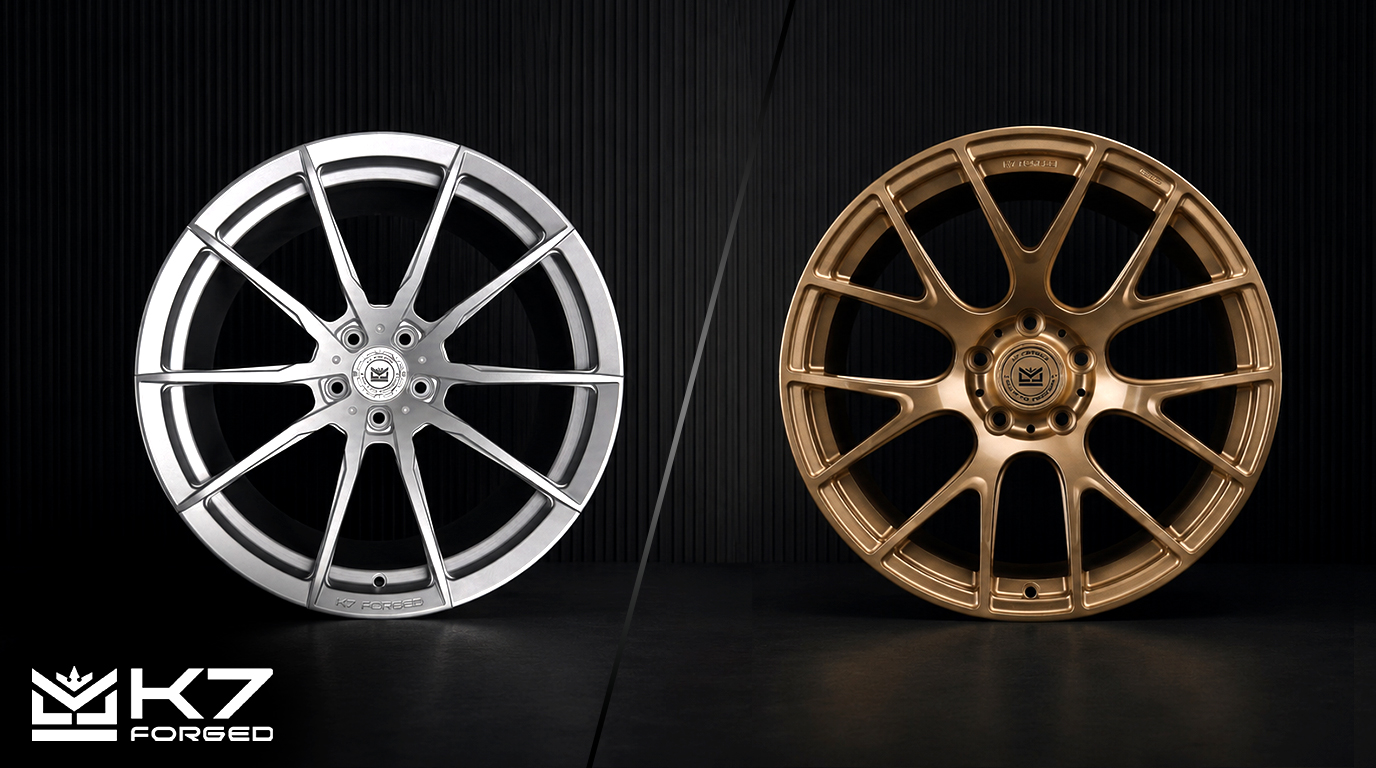
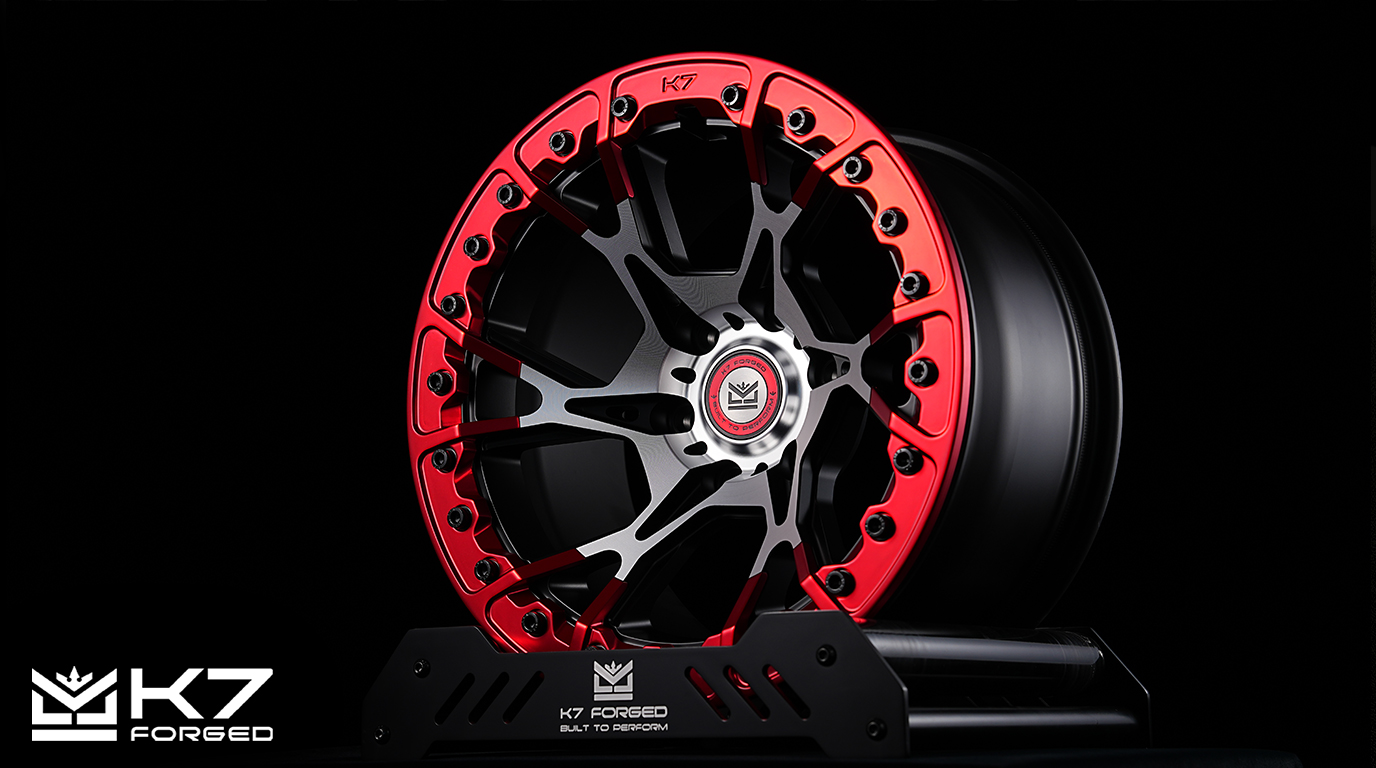
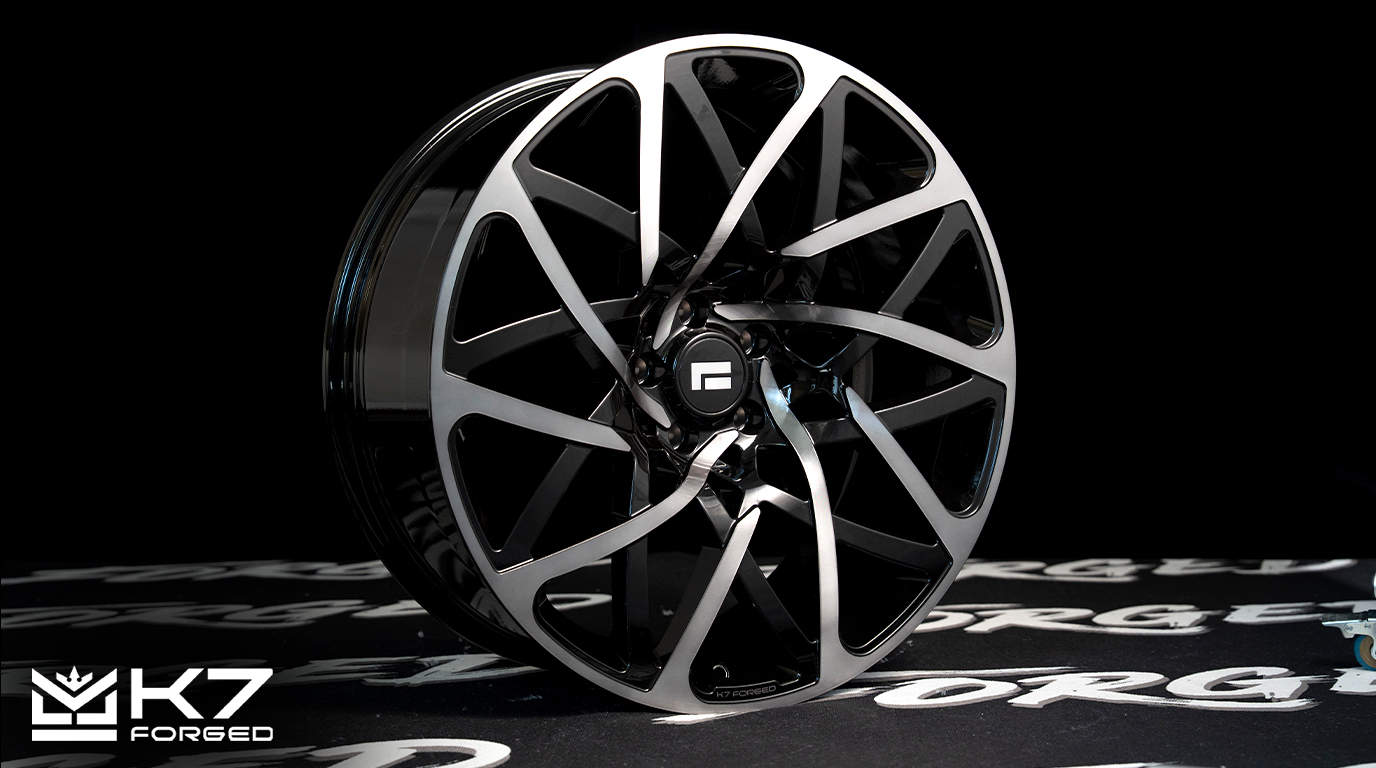
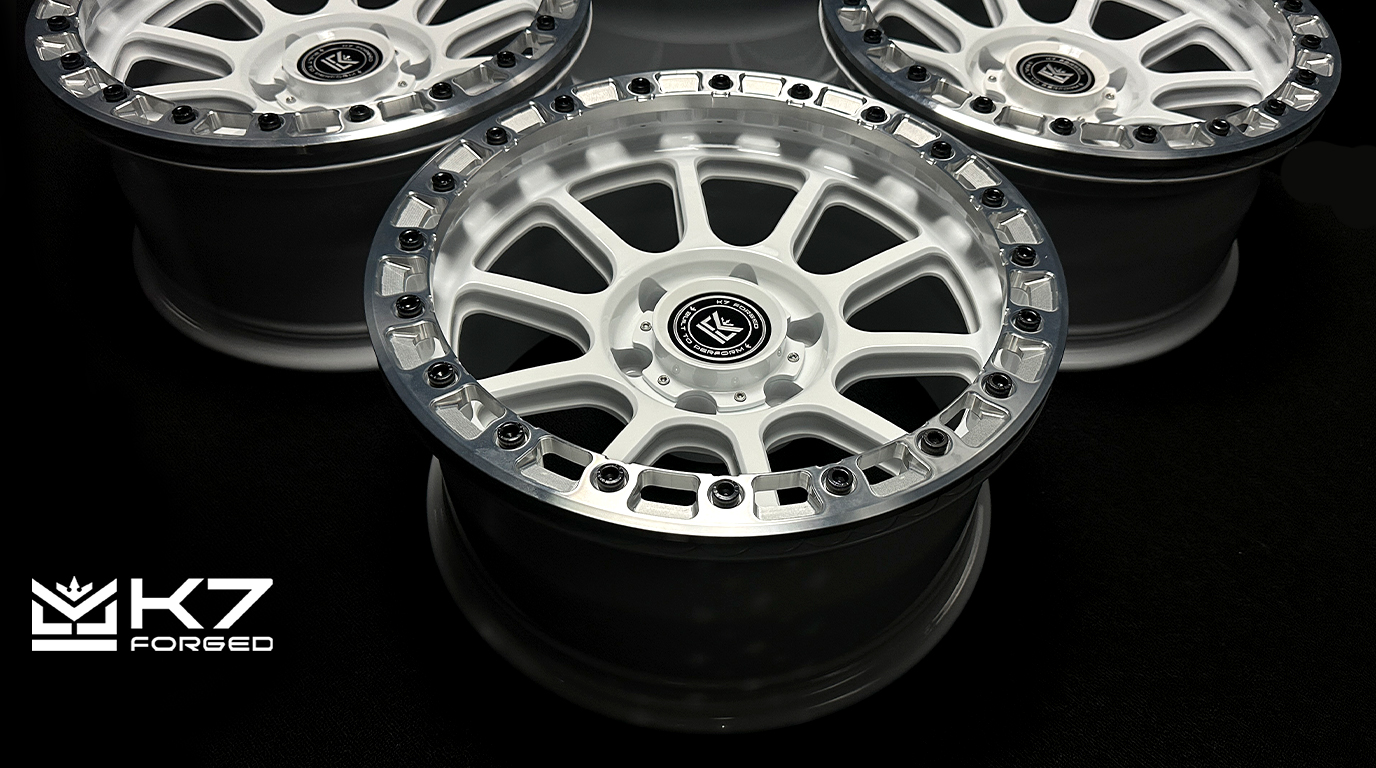
Forged 6061-T6 aluminium has a tightly aligned, continuous grain structure that resists crack initiation better than cast alloy when the rim takes an impact load. The 6061-T6 elongation rating of 12 to 17 percent means the material deforms visibly before fracturing. K7 Forged CNC-machines every bead seat to exact tolerances, producing a smooth sealing surface that cuts the risk of slow leaks. Explore the full K7 Forged wheel collection across TEC, CLR, VLC, ELE, DRG, and TER Series to find the right wheel for your vehicle.
What should you do if your alloy wheels are damaged after a flat tire
Stop safely, change to your spare using the correct jack point, and avoid sealant unless there is no alternative. Before returning the damaged wheel to service, have it inspected for rim cracks and bead seat damage. If replacement is needed, contact K7 Forged for a set built to your vehicle specifications. Every K7 Forged alloy wheel ships with a lifetime structural warranty and documented load ratings.
FAQs
Can a flat tire damage suspension components even if the alloy wheel looks intact?
Yes, even brief flat driving transfers road impacts directly through the rim to shocks, suspension arms, and wheel bearings that a pressurized tire normally absorbs.
How do I check my alloy wheels in Dubai for hidden cracks after a flat?
A qualified technician can use a dye penetrant test or strong-light visual inspection to find hairline cracks that are not visible under normal conditions.
Does wheel balancing after a flat confirm the wheel is structurally safe?
No, balancing addresses weight distribution only and cannot detect cracks, so a damaged rim can balance correctly while remaining unsafe at speed.
Are K7 Forged alloy wheels more resistant to flat-tire rim damage than cast aftermarket wheels?
Yes, forged 6061-T6 grain structure resists crack propagation significantly better than cast alloy, making K7 Forged wheels far more resilient when the rim contacts the road during a flat.
How far can you drive on a completely flat tire before the alloy rim is damaged?
We advise a few hundred feet at walking speed as the maximum, as alloy rim damage becomes likely beyond a quarter mile, and the rim is usually destroyed at one mile.