Electric cars obviously drive differently than gas cars. The battery pack is low and heavy, the motor gives 100% torque immediately when you press the pedal, and there’s no engine noise to mask wheel vibration. Picking the wrong wheel and you’ll see decreased range, reduced tire life, and cabin comfort.
Key highlights
● Forged wheels cut rotational mass, so the motor uses less energy.
● EV wheels need higher load rating because battery packs add extra weight.
● Closed and semi-closed spoke designs lower drag around the wheel.
● Wheels can account for up to 25% of a car’s total aerodynamic drag.
● K7 Forged TEC-325 and TEC-326 wheels are built for EV torque loads and battery weight.
Why rotational mass adds more weight on an EV
Every kg on your wheel gets spun up by the motor and slowed by the brakes, every time you accelerate or stop. Rotational mass behaves differently from regular weight, since the wheel has to overcome its own resistance to spinning.
A cast wheel is made by pouring molten aluminum into a mold. The metal cools with tiny air pockets trapped inside, so manufacturers add extra material to keep it strong, and it ends up near the rim, the worst spot for rotational inertia.
In forging, a solid billet of aluminum gets compressed under thousands of tons of pressure, aligning the metal’s grain and removing porosity. The result is a wheel built 20 to 30% lighter than a cast wheel while holding the same or higher strength. K7 Forged uses 6061-T6 aerospace-grade aluminum, forging each wheel as one dense piece. EV owners notice the difference first in stop-and-go traffic, where Tesla owners have reported better range on lighter aftermarket wheels.
The load rating problem nobody talks about
EV batteries add real weight. A Ford F-150 Lightning weighs almost a ton more than its gas counterpart, and even a compact EV like the Chevrolet Bolt carries 200 extra pounds over a comparable gas sedan. All of that weight rides on four contact patches the size of your palm, which is why tire makers created the HL, or high load, rating standard, adopted in the US in 2023. Wheels need to keep pace too. Aftermarket EV wheels need a verified load rating that matches or beats the OEM spec, and a size that fits is not enough on its own.
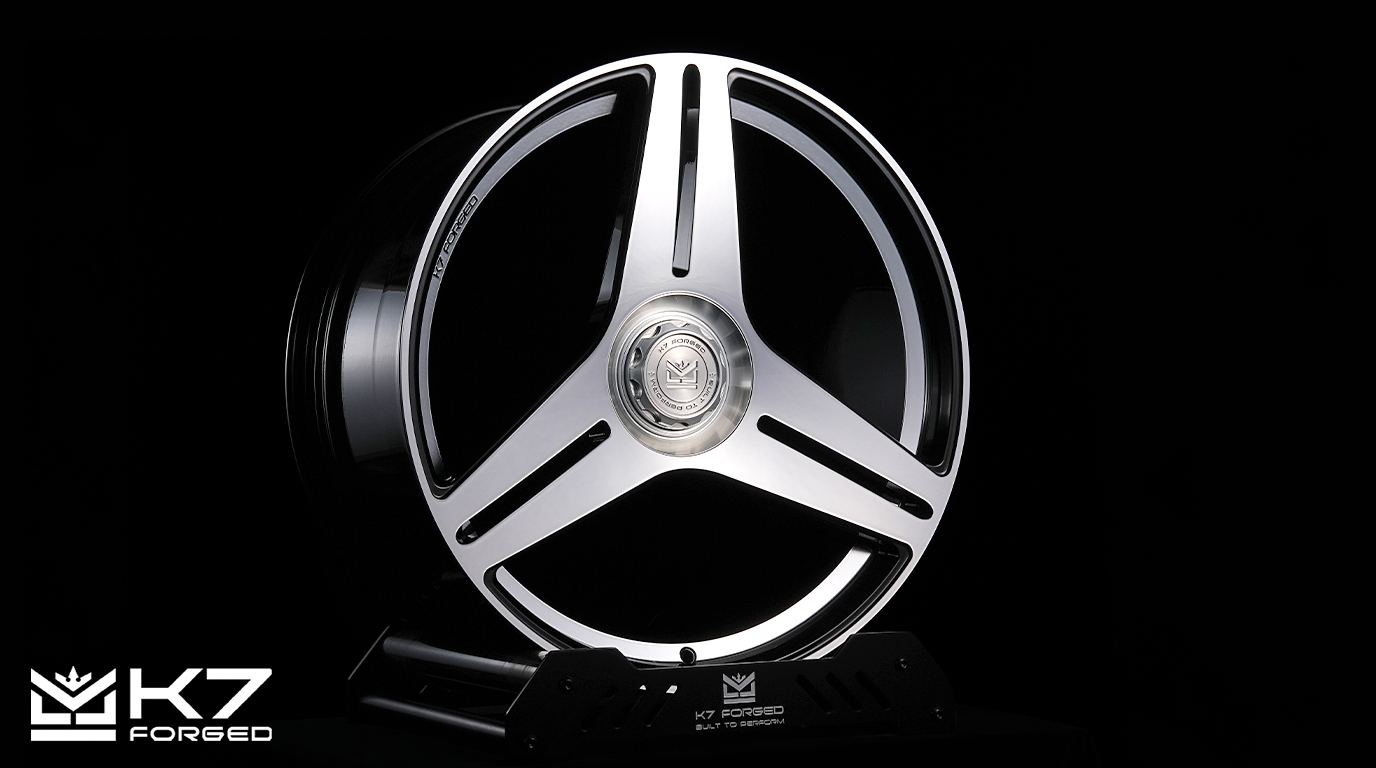
K7 Forged’s TEC Series was built around this gap. The TEC-325 and TEC-326 use monoblock forged construction with CNC-machined backside pocketing to cut weight without cutting load capacity. Both fit EVs like the Porsche Taycan Turbo S, the Audi RS e-tron GT, and the Tesla Model S Plaid.
Aerodynamics is the part most wheel buyers skip
Wheels are one of the most turbulent zones on a car. Research from Chalmers University and peer-reviewed CFD studies say that wheels can account for up to a quarter of a vehicle’s total aerodynamic drag, and closed or semi-closed spoke designs cut that drag more than open, deep-dish patterns.
A 2013 US patent on aerodynamically efficient wheel spokes describes how open spokes pump air outward as the wheel spins, raising pressure drag around the wheel well. The fix is a spoke geometry that limits how much air moves through the wheel cavity.
For a gas car, this costs a little fuel economy. For an EV, it costs, because drag becomes the dominant force fighting the motor at highway speed. Tesla ships aero covers on its base wheels for this reason, even though many owners remove them for looks.
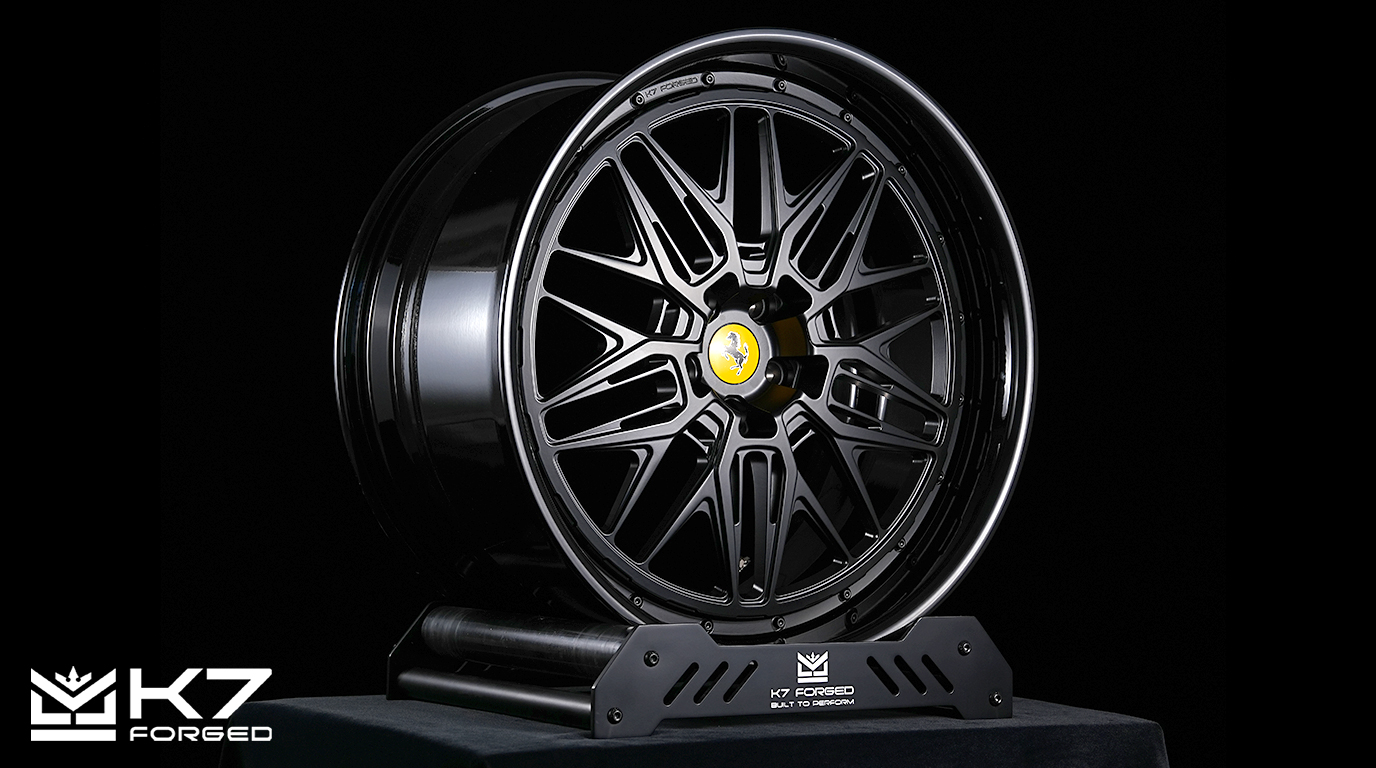
K7 Forged’s VLC Series gives EV owners a middle ground. The VLC-506 uses a tighter, high-coverage spoke pattern that limits open area around the wheel cavity, and it works well on heavier luxury EVs like the Porsche Taycan or Audi e-tron GT.
Matching the wheel to your EV platform
A lightweight sedan built for range wants a smaller, closed-face wheel. A heavy performance EV with instant torque needs a wheel that handles both the load and the launch force without flexing.
The TEC-325 and TEC-326 suit sports sedans and performance EVs where instant torque stresses the wheel while launching, since forged monoblock construction resists flex better than a cast or flow-formed alternative. For heavier luxury EVs and electric SUVs, the VLC Series and select ELE Series models bear the load rating and styling that flagship owners expect.
Before you buy, check your EV’s exact load rating, confirm the bolt pattern and offset match your platform, and pair the wheel with a tire built for EV load and torque. Range and handling only improve when the wheel, tire, and fitment work together. For a closer look at how forging compares with casting, see our guide on the surprising reasons to invest in custom wheels.
Get the right forged wheels for your EV
If you drive an EV and want wheels built to handle battery weight and instant torque, K7 Forged’s TEC and VLC Series are best in the market. You’ll get a forged aluminum build with real load ratings and low rotational mass. Reach out to our team for a fitment consultation on your Tesla, Porsche Taycan, Audi e-tron, or any electric platform, and we’ll match you with a size, offset, and design that protects your range and handling. Browse the full shop collections to compare every K7 Forged series side by side.
FAQs
Do lighter wheels improve EV range?
Yes, lighter wheels reduce the rotational mass the motor has to spin.
What size wheel is best for EV range?
Smaller wheels around 18 to 19 inches preserve more range than larger 21 or 22 inch ones.
Are forged wheels stronger than flow-formed wheels for EVs?
Yes, forged wheels have a denser grain structure, which gives a higher strength-to-weight ratio for EV torque.
Do EV wheels need special tires?
Yes, EV tires usually carry an HL or XL load rating to safely handle the added weight of the battery pack.
Can I put standard aftermarket wheels on my EV?
You can, but confirm the load rating, bolt pattern, and offset.