Buying off-road wheels by looks alone is how good SUVs end up with cracked rims. Dubai’s dunes and mountain trails are powerful enough to punish even the most expensive wheels picked for style over specification.
A wheel that looks aggressive but has the wrong load rating or offset can fail exactly when you need it most, halfway up a rocky climb or deep in soft sand. Here are the numbers that decide fitment, and how to match them to the SUVs UAE drivers take off-road most.
Key Highlights
● Load rating comes from your axle weight, and you shouldn’t assume it
● Bolt pattern and offset are of higher priority for fitment than style
● Patrol, Land Cruiser, and Wrangler each need different specs
● Beadlock rings solve the problem with grip during low tire pressure
● K7 Forged builds custom 4×4 rims with perfect match of your SUV specs
Start with Load Rating; design comes later
Every off-road wheel has a maximum load rating, stamped on the back near the hub. This number tells you how much weight one wheel can carry safely. Your vehicle’s placard lists the Gross Axle Weight Rating, or GAWR, on the driver’s door jamb. Divide the higher of the front or rear GAWR by two, and that gives you your minimum wheel load rating.
A Nissan Patrol Y62 with a rear GAWR near 1,700 kg needs wheels rated above 850 kg each. Add a roof tent, recovery gear, and a full tank, and that margin disappears fast, so serious off-roaders round up.
SAE J328 sets the fatigue testing standard for passenger and light truck wheels sold in the US, and most forged aftermarket wheels reference it alongside the Japanese JWL standard for radial and cornering fatigue. A forged wheel from 6061-T6 aluminum has a higher load rating than a cast wheel of the same size, since forging compresses the metal’s grain structure.
Bolt pattern and Offset for popular Dubai SUVs
Bolt pattern, written as something like 6×139.7, tells you the number of lugs and the diameter of the circle they sit on. If you get this wrong, the wheel may not mount at all. Offset is trickier, though. It measures the distance in millimeters between the wheel’s true centerline and its mounting face, and it decides how far the tire is placed from your fender.
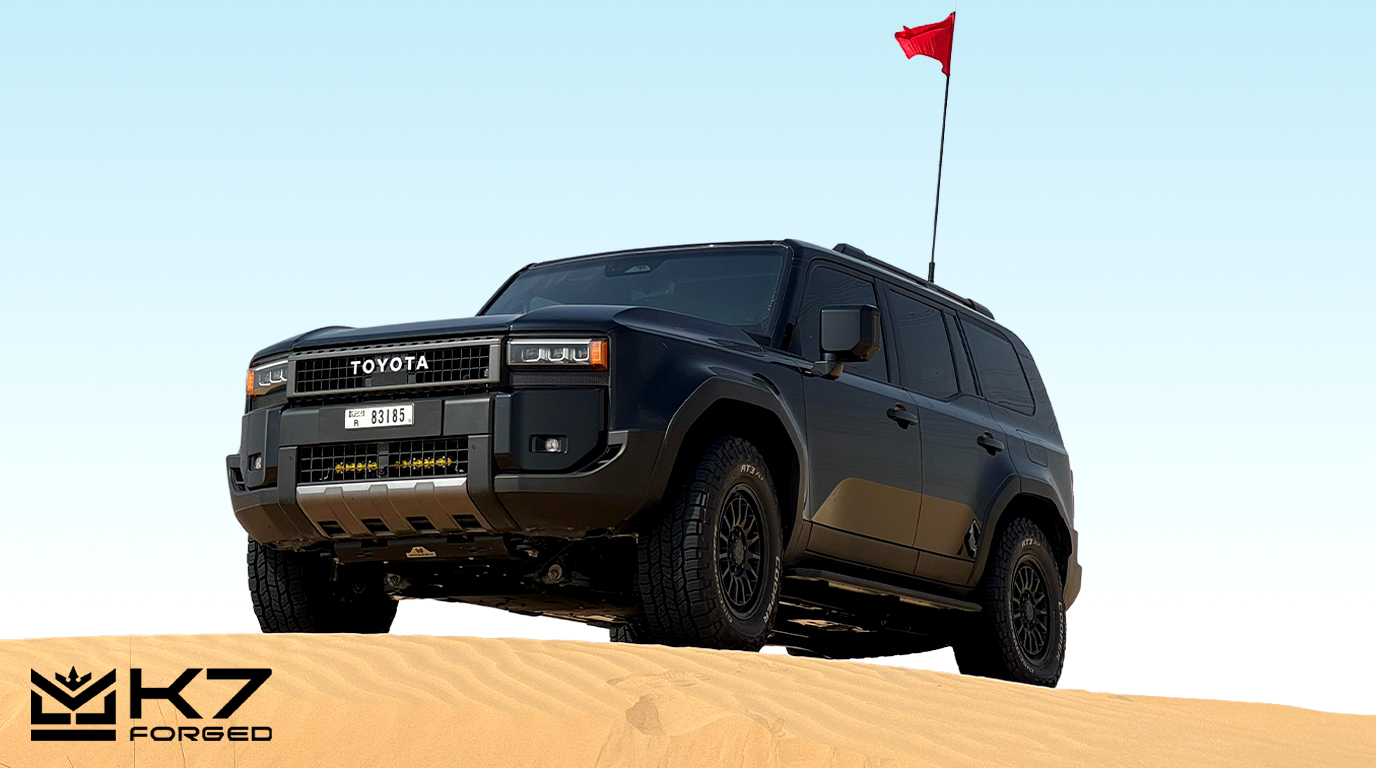
· The Nissan Patrol Y62 and Toyota Land Cruiser 300 both run a 6×139.7 pattern, though their ideal offsets are different.
· Land Cruiser 300 owners need to stay near a plus 25mm offset to clear the front brake calipers, while the Patrol tolerates a wider range.
· Jeep Wrangler JL owners work with a 5×127 pattern, and most off-road builds land between 0mm and negative 20mm, depending on lift height and tire width.
· Mercedes G-Class runs 5×130, a pattern with fewer aftermarket options, so confirming exact fitment is even more important.
Going too negative on offset pushes the tire outside the fender line and stresses wheel bearings and tie rod ends. Too much positive offset tucks the tire in and can cause rubbing against suspension arms during full compression.
Why Beadlock rings change the game in extreme off-road
Standard wheels use air pressure alone to keep the tire bead fixed against the rim. If you drop below roughly 15 PSI for extra traction on sand, the bead can slip during hard cornering or a sudden stop. A true 4×4 beadlock rim uses a bolted outer ring that clamps the tire bead in place, so it stays there even below 5 PSI.
Taking on the dunes near Dubai most definitely need you to use beadlock rings, since drivers routinely air down for flotation on soft sand. Rock crawlers in Hatta or Ras Al Khaimah get the same benefit, since low pressure lets the tire wrap around obstacles instead of bouncing off them.
But not every wheel that looks like a beadlock functions as one. Some designs are cosmetic rings bolted on for appearance, with no real clamping force behind them. A functional beadlock needs a metal ring, a rubber gasket, and a full bolt circle torqued to spec, and those bolts need re-torquing after the first hard trail run.
Matching K7 Forged series to your off-road build
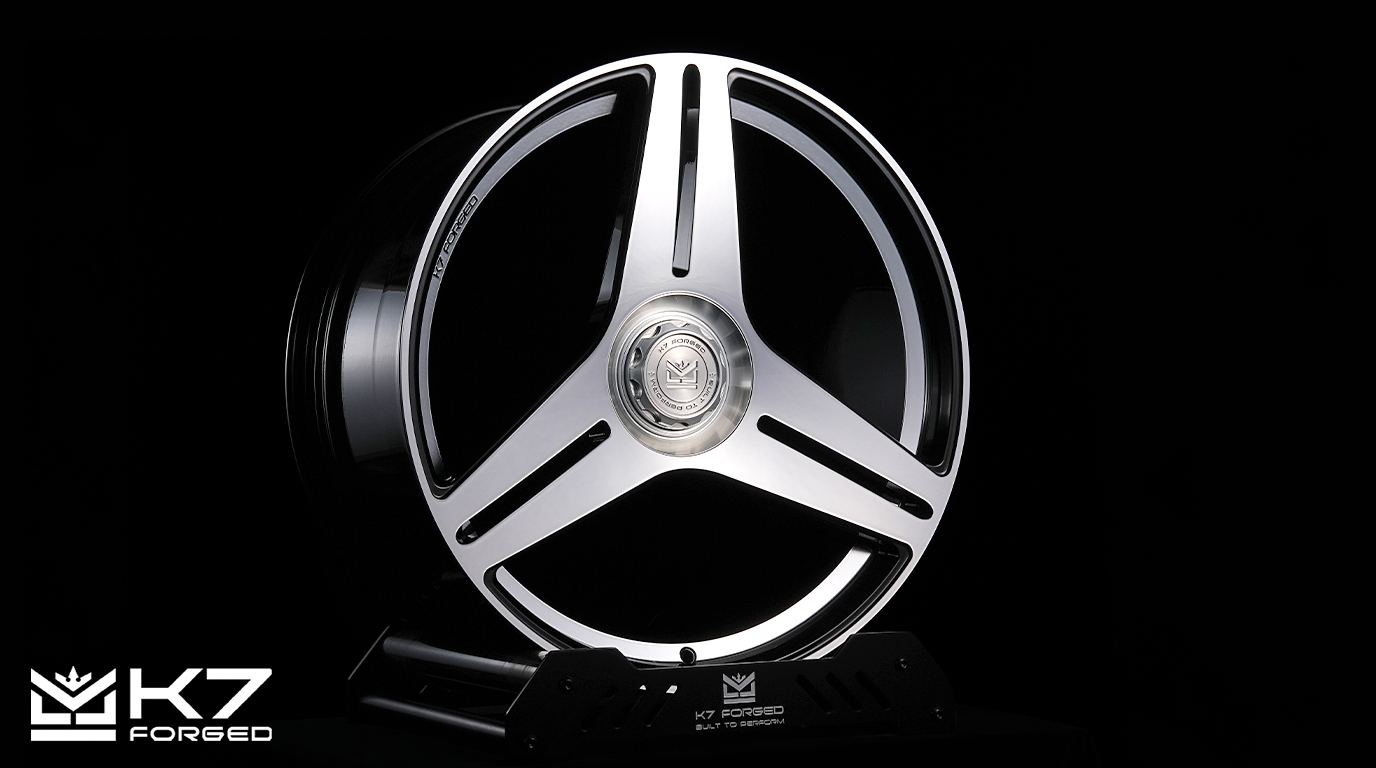
K7 Forged’s TER Series is the best off-road aftermarket wheels in Dubai. These are one-piece HD monoblock wheels forged from 6061-T6 aluminum, built in 5, 6, and 8 lug PCD configurations to match Patrols, Land Cruisers, G-Wagons, and Wranglers without spacers. TER-619 and similar models come with true beadlock capability for drivers who air down regularly, while other TER models suit owners who want the rugged look with standard tire retention for highway use.
For high-horsepower off-road trucks that also see drag strip time, the DRG Series adds a single beadlock ring built for torque control instead of sand flotation, useful for owners running 1000 horsepower or more through a heavy-duty axle. Every K7 Forged wheel gets custom CNC machining for the exact PCD, offset, and load rating your vehicle needs, instead of a generic size that happens to bolt on.
How to get your off-road fitment right the first time
Check your door jamb sticker for GAWR before you shop. Confirm your bolt pattern and hub center bore. Decide on offset based on suspension travel and any plans to lift the vehicle. Then choose between a standard forged wheel and a true beadlock, based on how often you air down on the trail.
K7 Forged builds each set of custom 4×4 rims with these numbers guiding us. We never do one-size-fits-all mold, so your wheels match your Patrol, Land Cruiser, Wrangler, or G-Class the way factory engineering intended.
If you have made up your mind to build a off-road wheel set for your SUV (with exact specifications), send K7 Forged an enquiry today, and our engineering team will confirm your load rating, bolt pattern, and offset before your custom 4×4 rims go into production.
FAQs
Can I mix beadlock and standard wheels on the same 4×4?
If you hard corner with mismatched retention systems, it creates uneven handling and unpredictable tire rotations.
Does a heavier off-road wheel hurt fuel economy?
Yes, but not much, though the traction gain outweighs the fuel loss for serious off-roading.
How often should beadlock bolts be re-torqued?
Check them after the first 50 kilometers of hard off-road use and periodically afterward.
Can wheel spacers fix a bolt pattern mismatch?
Spacers only adjust offset and track width, they cannot convert one bolt pattern to another.
What tire pressure is safe for dune driving with a beadlock wheel?
Most off-roaders drive between 8 and 15 PSI, and the exact figure depends on tire size and vehicle weight.