On a typical GCC track day, brake temperatures cross 500°C and cars run repeated high-speed pulls without cooldown. Many cheap aftermarket wheels sold as racing wheels in UAE start showing vibration, heat soak, or microcracks after a few sessions. The problem comes from poor load distribution, excess weight at the rim edge, and incorrect fitment.
This is where real racing wheels from K7 Forged separate themselves. Based on our experience making the best wheels in Dubai, we have made this detailed guide that breaks down what constitutes race-ready forged alloy wheels.
Key Highlights
- Racing wheels in the UAE must handle heat, load cycles, and high-speed stress
- Proper load path design improves durability and prevents fatigue failure
- Weight distribution at the rim edge affects acceleration and braking response
- Open spoke designs improve airflow and reduce brake fade on track
- Correct offset and hub-centric fitment maintain stability and steering precision
Structural strength and load path design in racing wheels
A racing wheel works as a load transfer component. It starts at the tire contact patch, moves into the rim barrel, then through the spokes, into the hub, and finally into the suspension.
Stress does not spread evenly across the wheel. It concentrates on spoke roots, hub mounting pads, and inner barrel transitions. K7 Forged engineers studied this using finite element analysis and von Mises stress mapping. Our goal was to spread the load evenly and avoid sharp stress spikes.
With innumerable data points, we designed the best racing wheels in the UAE with controlled spoke geometry and reinforced hub zones to maintain durability under repeated stress.
Rotational mass distribution and inertia in car racing wheels
Mass located on the outer barrel of the car’s wheels significantly increases rotational inertia. Moment of inertia increases with the square of the radius, so outer-edge weight slows acceleration and braking response.
K7 Forged’s scientifically designed racing wheels reduce material at the rim edge and keep strength near the hub and spoke junctions, which allows faster rotation and quicker deceleration.
Modern racing wheels use forged construction
Racing wheels UAE car owners use rely on forged alloy wheels because of their internal structure. Forging compresses aluminum under high pressure, which aligns the grain flow along the shape of the wheel.
Flow forming strengthens the barrel area by stretching the material, but it does not fully control grain structure across the spokes and hub. Motorsport applications continue to prefer forged wheels because they handle stress consistently across the entire structure.
Billet is the raw aluminum block, not the final strength. Without forging, CNC machining alone does not align the grain structure. True forged wheels in the UAE, made by K7 Forged, combine compression and machining to achieve impressive structural performance for track use.
Brake cooling airflow and spoke design in racing wheels
Brake systems generate extreme heat during repeated braking, which moves from the rotor into the hub and then into the wheel barrel. If the wheel design restricts airflow, temperatures keep rising, and braking performance drops.
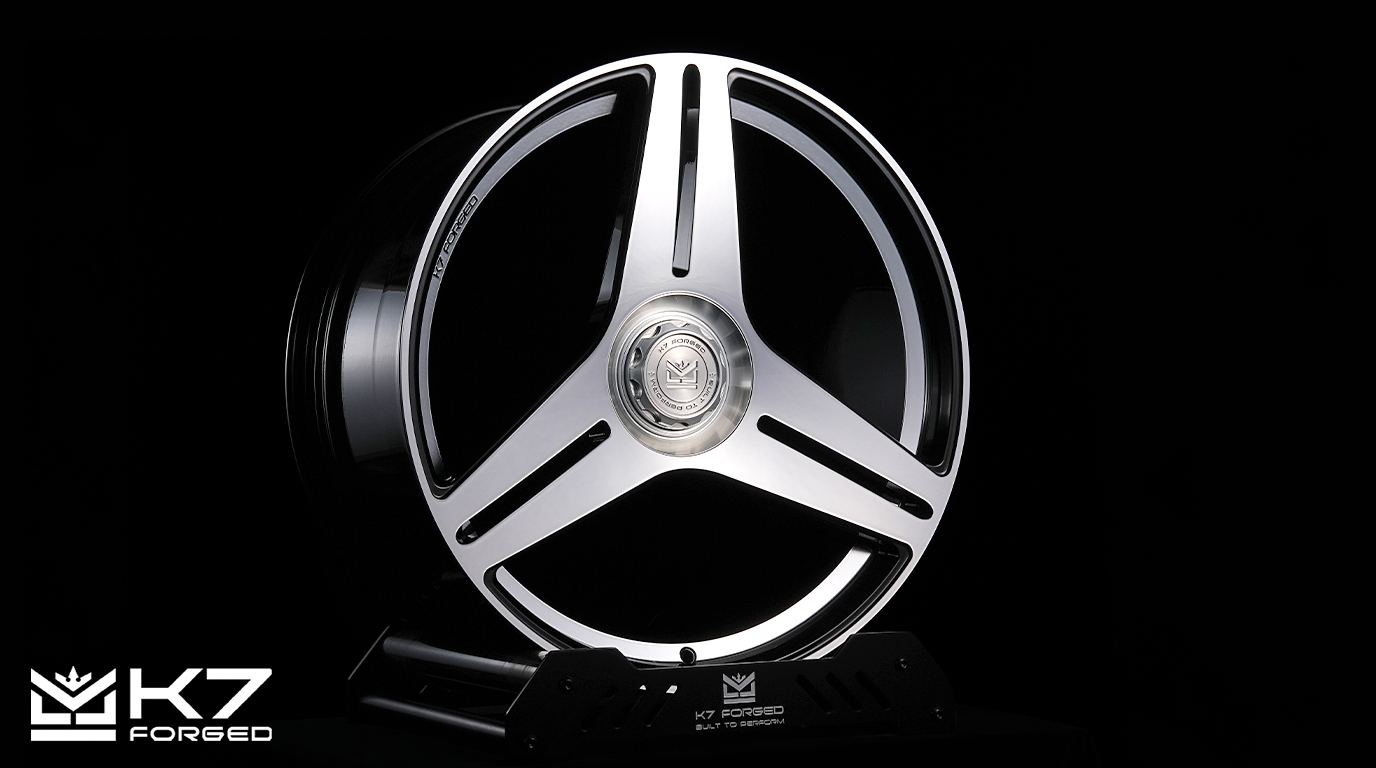
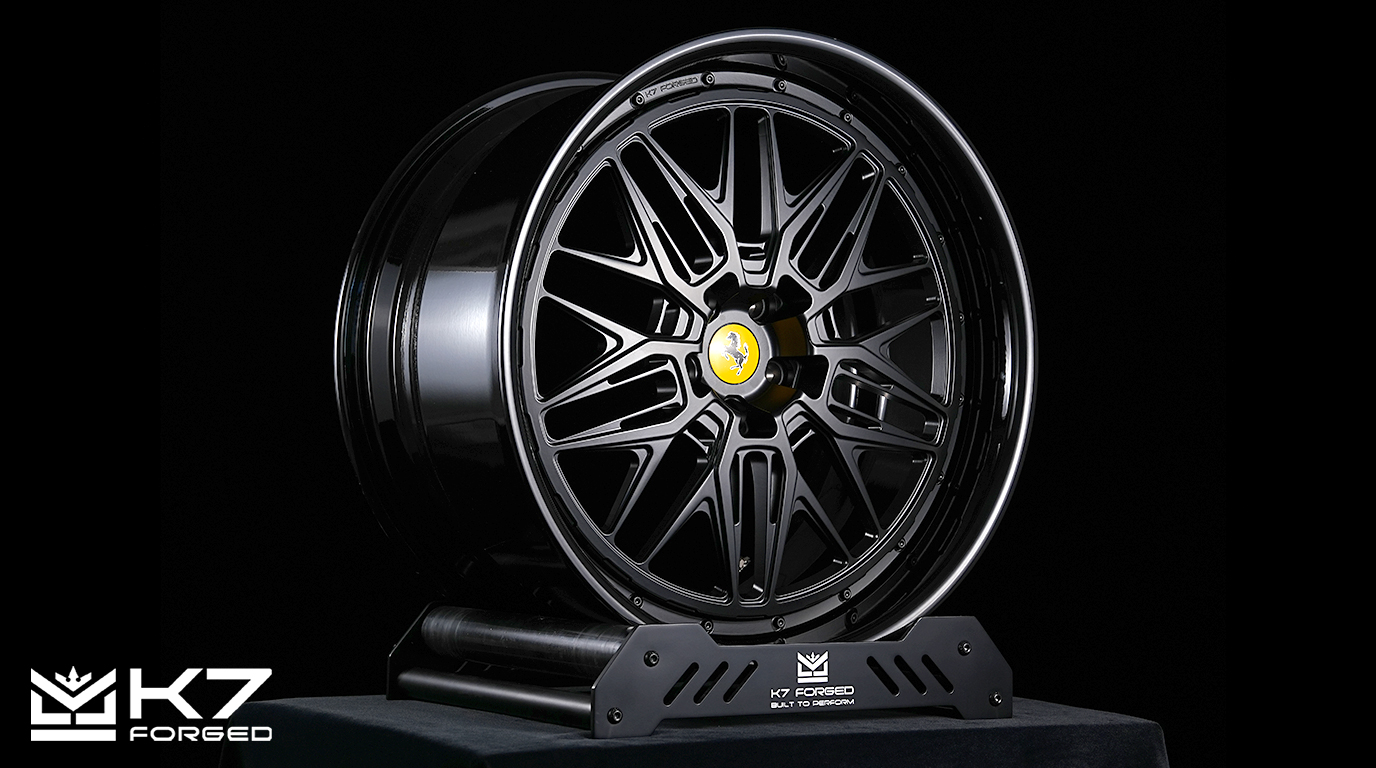
Airflow depends on spoke layout. K7 Forged’s open-spoke racing wheels in the UAE allow air to pass through the wheel face and move across the brake disc and caliper, which carries heat away and stabilizes braking performance.
Wider spoke gaps create better ventilation pathways, which improve heat dissipation. K7 Forged engineers balance this with strength, so the wheel does not lose rigidity.
On track, poor airflow shows up quickly. Drivers who use cheap wheels see brake fade after a few laps, even with strong brake kits. Well-designed performance wheels from K7 Forged control this by maintaining consistent airflow under speed.
Precision fitment, offset, and hub-centric design in racing wheels
When offset changes, it alters the scrub radius, which directly affects steering weight, feedback, and stability under braking. An incorrect offset increases leverage on wheel bearings. The load moves outward, which adds stress to suspension components. Over time, this reduces reliability and affects handling consistency.
A wider wheel setup increases the contact patch, but incorrect fitment can lead to uneven load distribution.
Hub-centric mounting plays a critical role. The wheel must sit perfectly centered on the hub. Lug-centric setups rely only on bolts, which can create slight misalignment and vibration at high speeds. Many aftermarket wheel setups in Dubai ignore this and use rings instead of precise machining.
Spacers push the wheel outward but add an extra mounting surface. This changes load paths and introduces additional stress points. Proper automotive rim Dubai setups from K7 Forged use direct fitment with correct offset and hub bore.
Types of racing wheels used in different motorsport applications
Racing wheels differ based on the forces they handle.
Circuit racing wheels prioritize low weight, high stiffness, and brake cooling. These wheels reduce rotational mass and allow consistent braking under repeated laps.
Drag racing wheels focus on traction and torque delivery. They use beadlock wheels to clamp the tire and prevent slip during high-power launches.
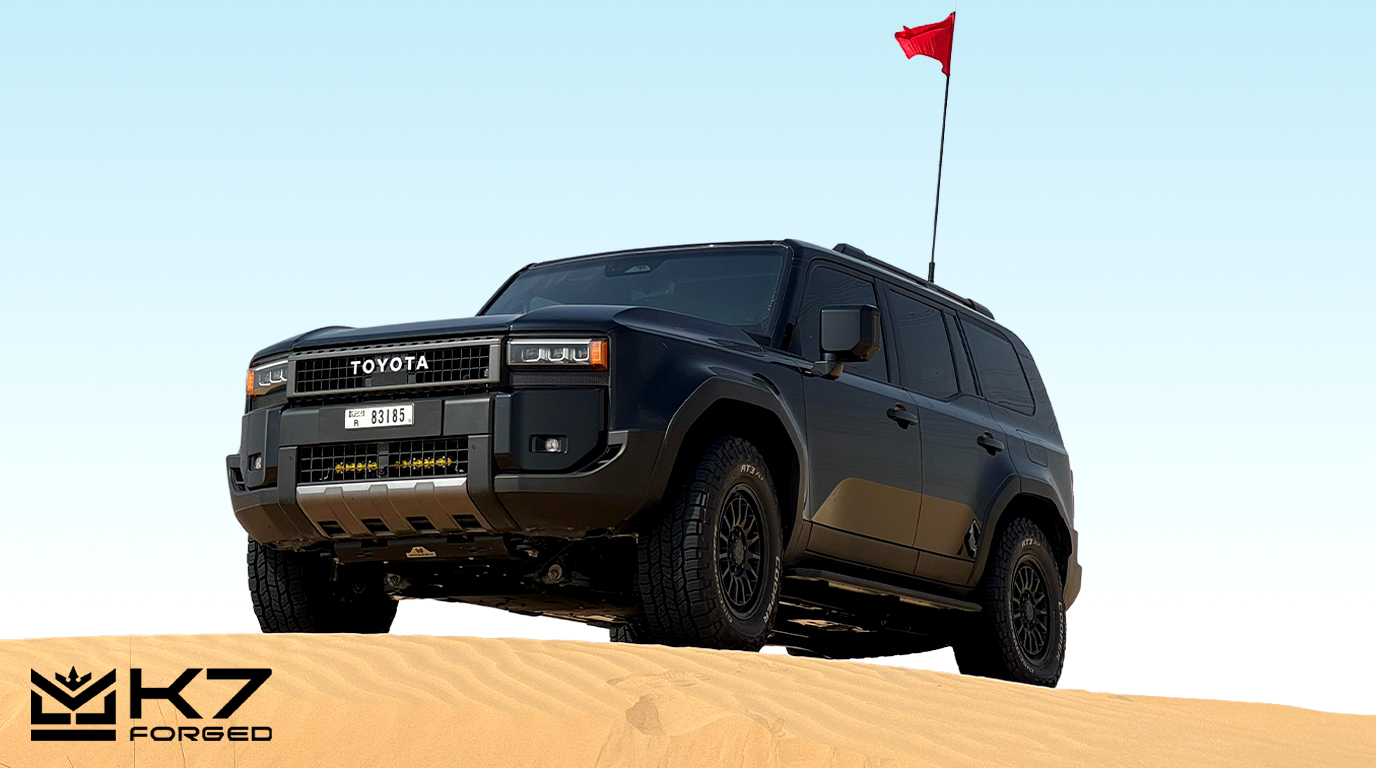
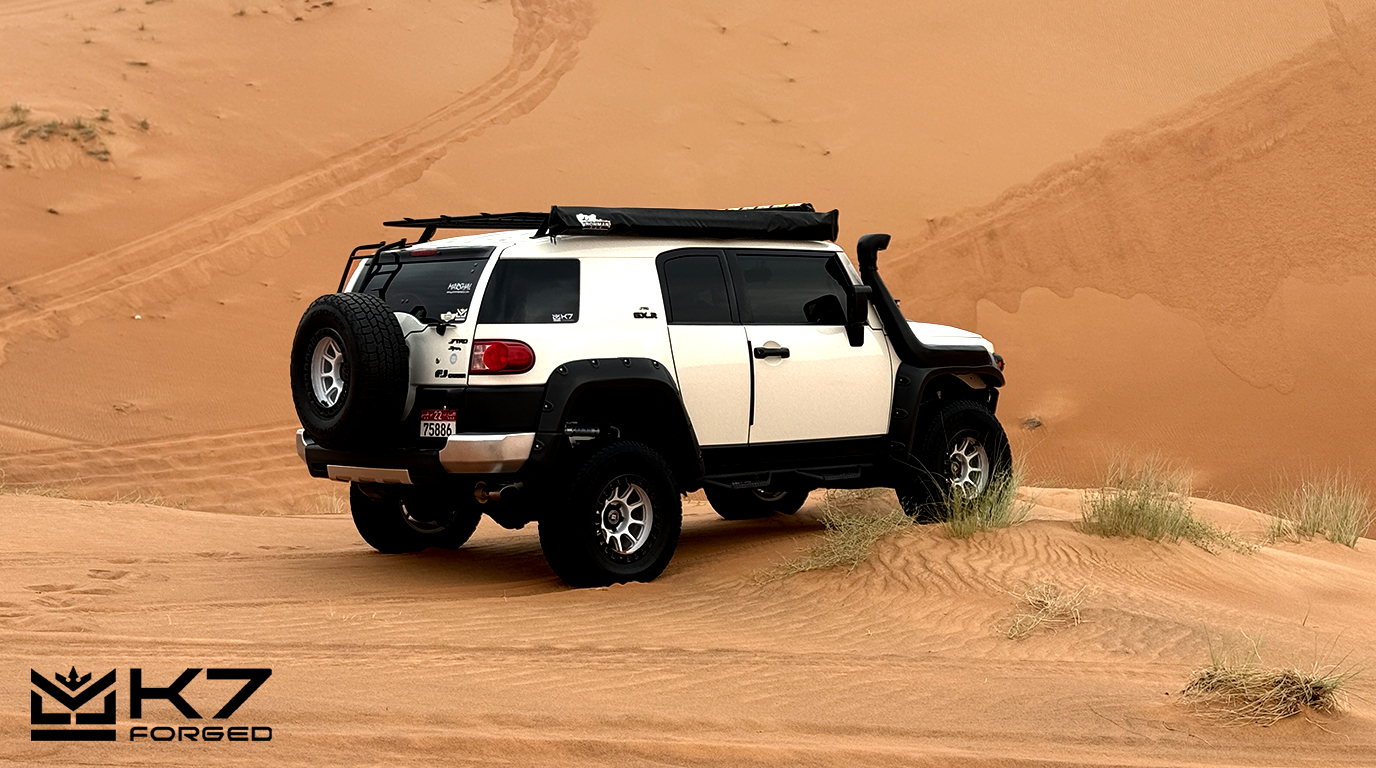
Off-road racing uses beadlock wheels for a different reason. Low tire pressure improves traction on sand and rough terrain.
Rally wheels balance strength and compliance. They handle repeated impacts from uneven surfaces while maintaining control.
Since each category solves a different problem, racing wheels cannot follow a single design approach.
How to choose race-ready racing wheels UAE drivers can trust
Choosing the best racing wheels UAE drivers can depend on starts with understanding structure, airflow, and fitment. A top racing wheel uses forged alloy construction, optimized spoke geometry, and controlled weight distribution to improve acceleration, braking, and steering response. Automotive rim buyers in Dubai choose the correct offset, hub-centric mounting, and brake clearance to maintain stability at high speed.
If you want reliable racing wheels, custom rims, or forged wheels in the UAE for track or street use, K7 Forged builds the best wheels based on real-world performance conditions.
FAQS
Racing wheels use optimized structure, weight distribution, and airflow design to handle high-speed loads and heat.
Custom wheels improve performance only when they follow correct engineering principles, as K7 Forged does in fitment and weight control.
Beadlock wheels are used in drag racing and off-road racing where tire slip must be controlled.
Incorrect offset changes steering geometry and increases stress on suspension components.
High-performance cars like Nissan GT-R, BMW M5, Porsche 911, and AMG models should get high-quality racing wheels from K7 Forged.