Buying new rims in Dubai looks straightforward until you get the one with the wrong offset. A custom rim may look perfect online, but if you fit it in your car, it may rub the fender or wear down your bearings within a few months.
Dubai roads, with the summer asphalt crossing 60 degrees Celsius and long highway runs, punish cheap aftermarket wheels. From our experience, we have made a list of five steps you must follow before you spend money on new wheels in Dubai.
Key highlights
- Check your bolt pattern, offset, and load rating before shopping for rims in Dubai.
- Lighter forged rims change how a car drives.
- Look for JWL, VIA, or TUV marks, since these prove a rim has had fatigue testing.
- Match the rim family to your car type.
- K7 Forged builds rims that withstand GCC heat, making us trusted rim manufacturers in Dubai.
#1 Pull your car’s exact wheel specs
Every car has a factory sticker inside the driver’s door jamb listing tire size, wheel diameter, and the load rating your manufacturer built. Write these numbers down before you search for rims in Dubai.
You need four numbers. Bolt pattern is the number of lug holes and the diameter of the circle they sit on, such as 5×112 for many German sedans. Offset, measured in millimeters, decides if the rim tucks in or pushes out. Center bore centers the rim on the hub, and load rating is the weight it carries per corner.
A wrong offset by even 10mm can shift static camber enough to wear the inner tire edge within a few thousand kilometers. Measure your current setup, or ask your dealer for the OEM spec sheet, before ordering.
#2 Calculate the load rating your car actually needs
Most buyers pick rims by looks and skip this step, yet it protects you the most. Take your car’s GVWR from the door sticker and divide it by four for your minimum required load rating per rim.
For daily street use, add a 1.5x to 2x safety factor on top. Hard cornering pushes loads higher, since cornering forces alone add 20 to 50 percent above static weight. K7 Forged builds separate rim families for this reason, and the ELE Series uses multi-spoke and full-face designs to spread load evenly across ultra-luxury SUVs that often cross 2.5 tons.
#3 Check for real certification, not marketing claims
Anyone can print premium on a wheel box. Certification marks differ, since independent bodies put the rim through impact and fatigue tests before it earns the stamp.
JWL certification, developed by Japan’s Ministry of Land, Infrastructure, Transport and Tourism, requires a wheel to survive 500,000 rotations of fatigue testing without cracking. VIA certification goes further, requiring roughly 2 million rotations plus third-party verification. TUV, Germany’s certification body, is the strictest, requiring the hub to survive 1 million revolutions without cracks. SAE J2530 sets the equivalent US standard.
Ask the rim manufacturer which certifications their rim holds, and ask to see the mark stamped on the barrel. A rim without these marks was likely tested in-house, or not at all.
#4 Match the rim design to your car type and driving style
Once your specs and load rating are set, the next decision is which rim family fits your driving style. Aftermarket wheel shops give one answer for every car, costing buyers a good looking rim that with poor performance.
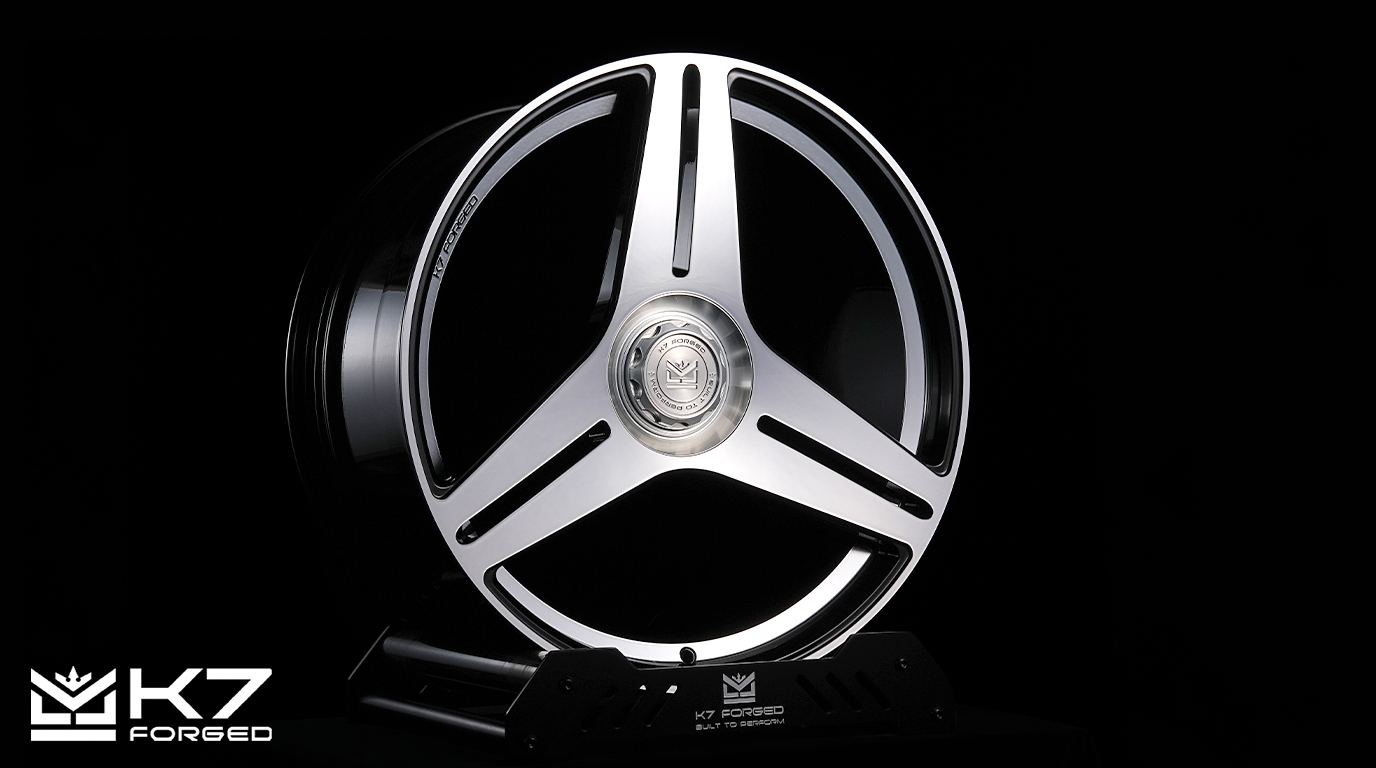
Track cars and lightweight sports coupes benefit from lower rotational mass. Cutting wheel weight by around 12 pounds per corner has improved 0-60 times by close to 0.3 seconds in controlled testing, and K7 built the TEC Series for this, using back-side pocketing and thin spokes for cars like the Porsche 911 GT3 RS. Wide-body cars and Super-SUVs such as the Lamborghini Urus need a deep concave profile that keeps the wheel flush without spacers, so the VLC Series uses a 2-piece duo construction for that geometry.
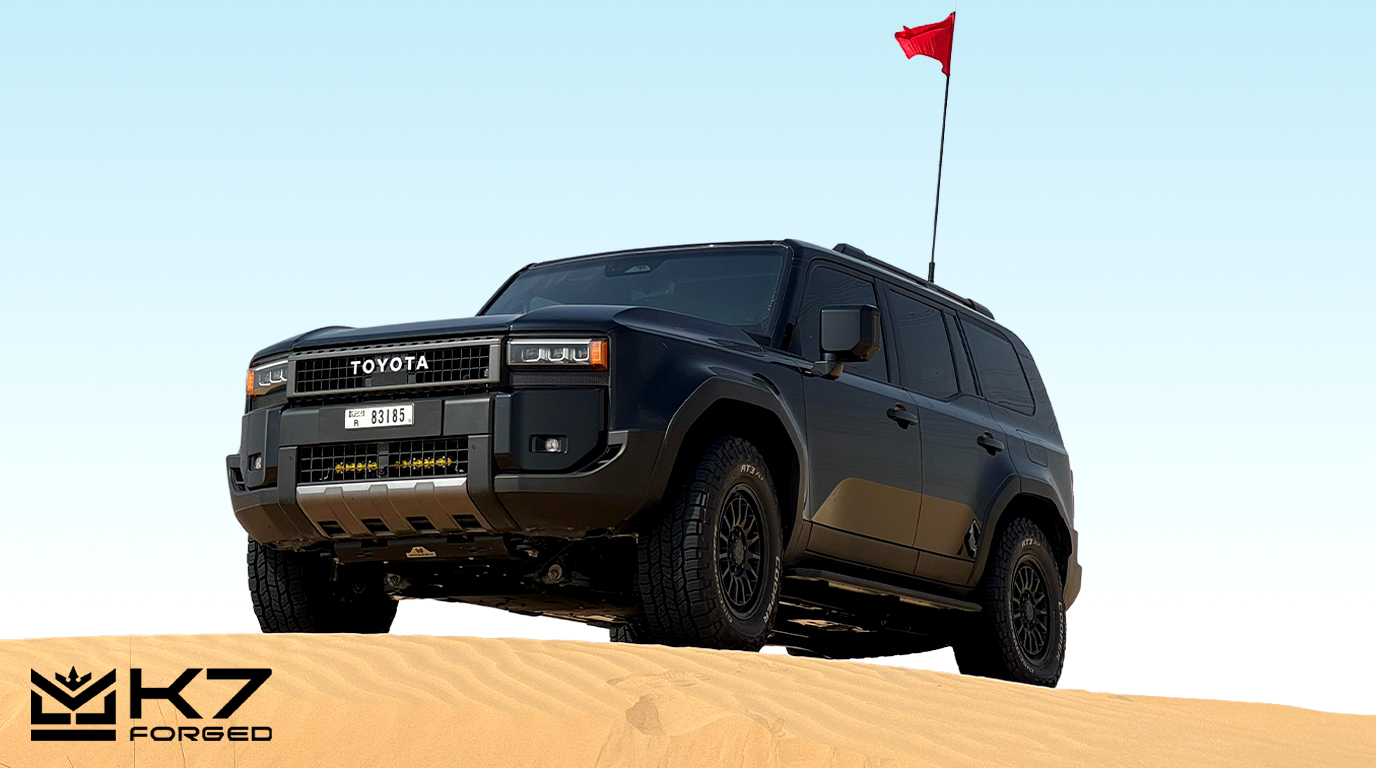
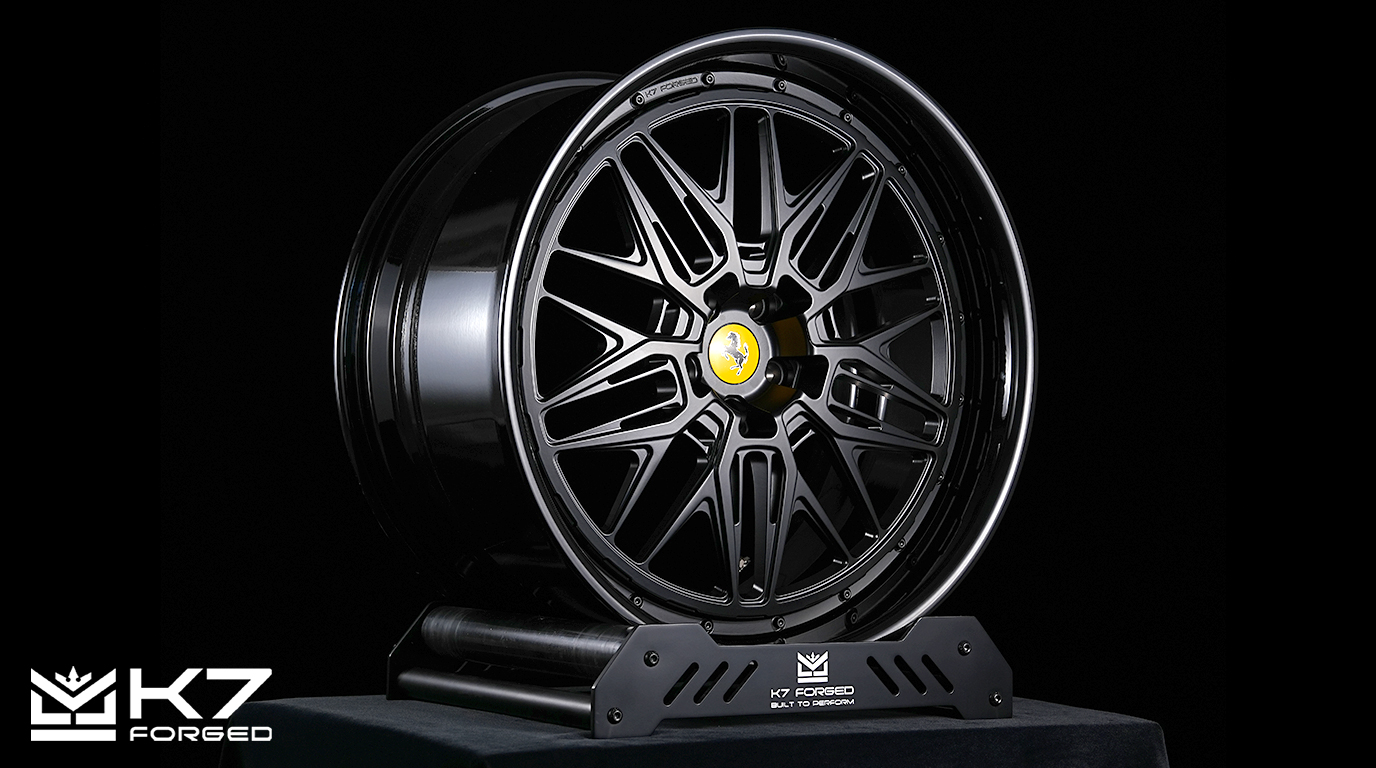
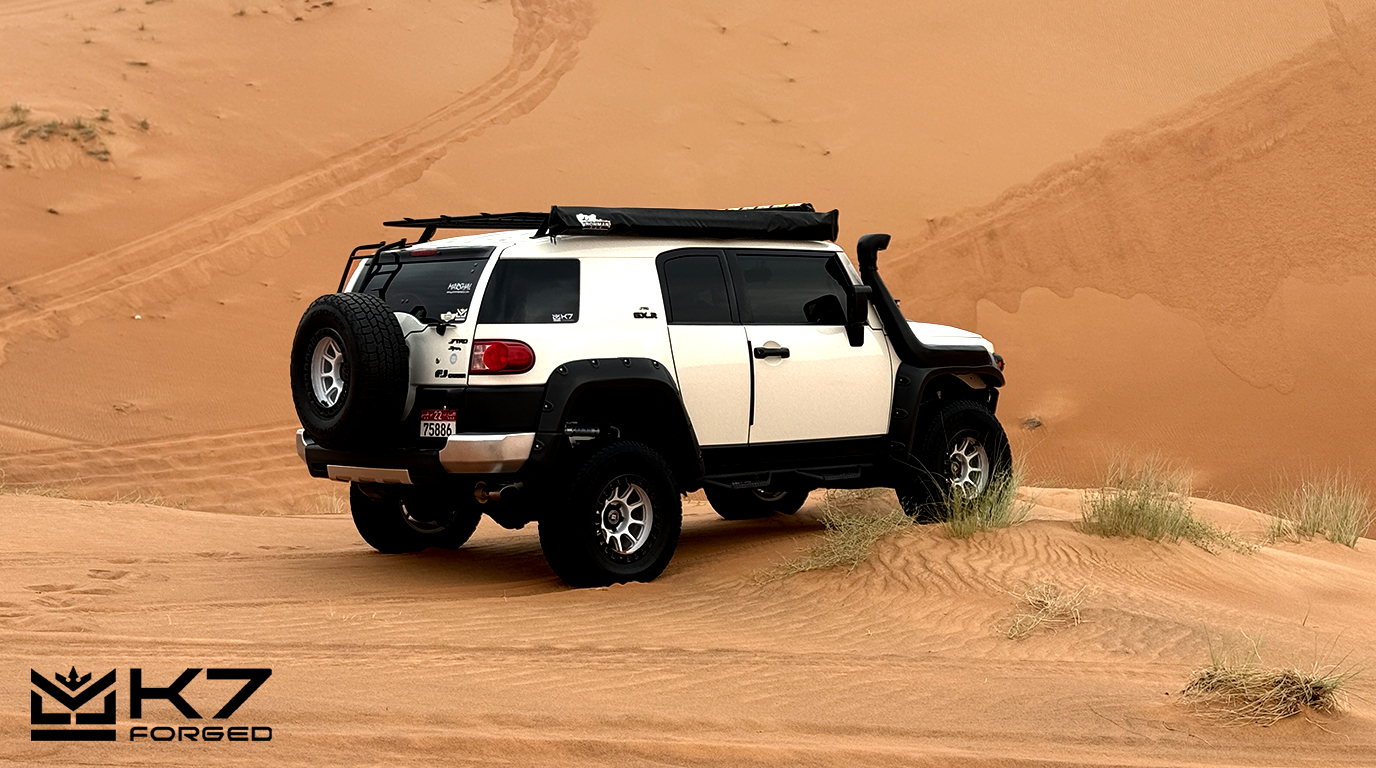
Off-road trucks like the Land Cruiser need thicker rim lips and beadlock capability for dune impacts, the basis of the TER Series. Drag builds past 1000 horsepower need a beadlock ring to stop the tire spinning independently of the rim, the premise behind the DRG Series, while the CLR Series brings that lighter, stronger build quality to classic JDM mesh designs.
#5 Research the manufacturer before you commit
A well-specified rim from a manufacturer with weak quality control still fails. Look into the production process. Forged wheels start as a solid billet compressed under extreme pressure, aligning the aluminum grain and producing a wheel 20 to 30 percent lighter than a cast equivalent at the same strength. Cast wheels, poured from molten aluminum into a mold, are heavier and more porous.
Check how long the manufacturer has operated locally, if they give a written warranty, and if they build to order. K7 Forged has built forged wheels out of Dubai since 2019, backed by a lifetime warranty and free shipping across the UAE, Saudi Arabia, and Kuwait.
What is the best way to buy new rims in Dubai
Buying rims in Dubai comes down to five checks done in order. Confirm your factory bolt pattern, offset, and load rating first, then calculate the real load your car needs, verify JWL, VIA, or TUV certification, pick a rim family engineered for your vehicle type, and research the manufacturer’s forging process. K7 Forged builds custom wheels across the TEC, VLC, ELE, DRG, CLR, and TER series, each engineered for a different vehicle category and GCC condition, a reason the brand ranks among the most trusted rim manufacturers in Dubai.
FAQs
How much does a set of forged rims cost in Dubai?
Pricing depends on rim size, finish, and construction, so K7 Forged quotes each set based on the vehicle.
Can I mix rim brands on the front and rear axle?
Mixing brands is not recommended, since manufacturers use different weight distribution and tolerances.
How long does it take to get custom rims made in Dubai?
Custom forged rims are made to order, so timelines depend on size, finish, and configuration.
Do forged rims need a different tire pressure than stock wheels?
Tire pressure should still follow your manufacturer’s recommended PSI unless the load index changes.
What is the difference between a 2-piece and a 3-piece rim?
A 2-piece rim bolts the face to a single barrel, while a 3-piece rim bolts the face between two barrel halves.