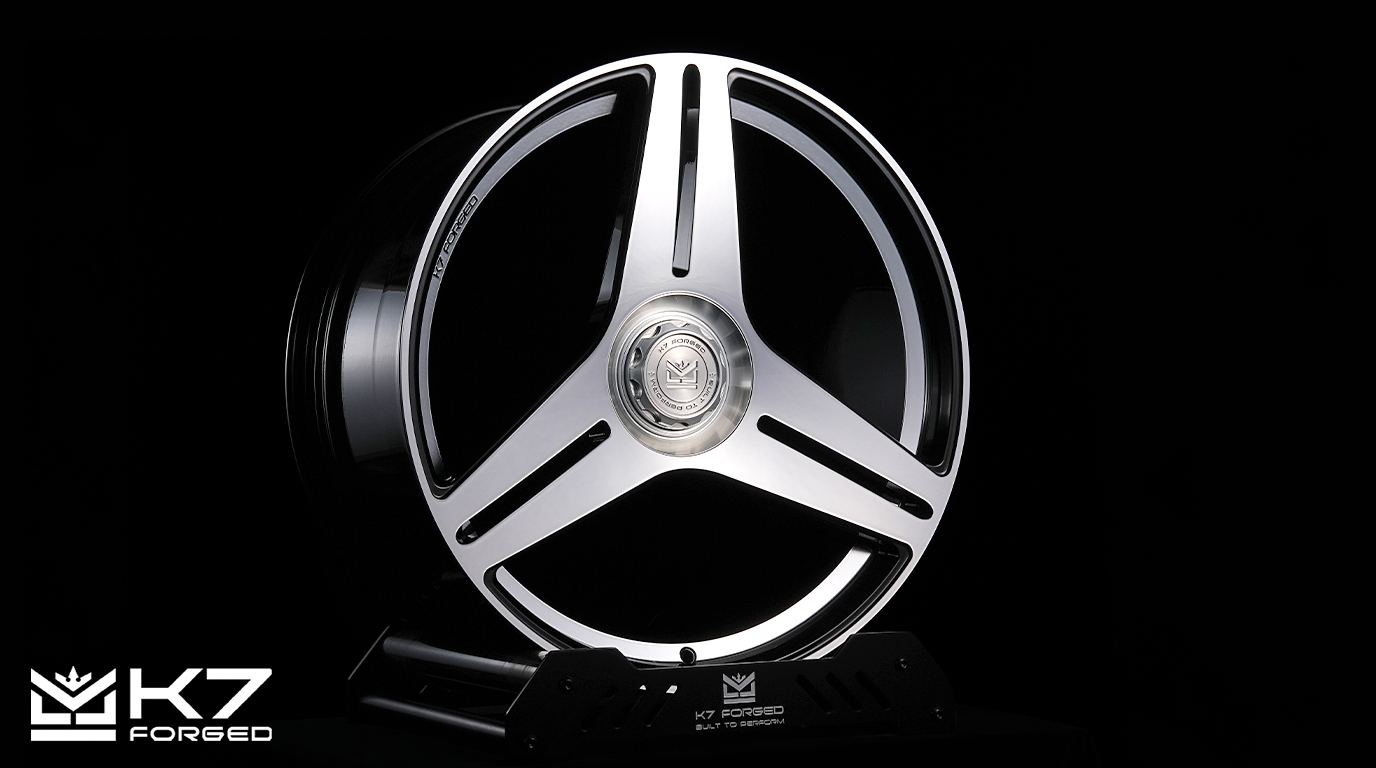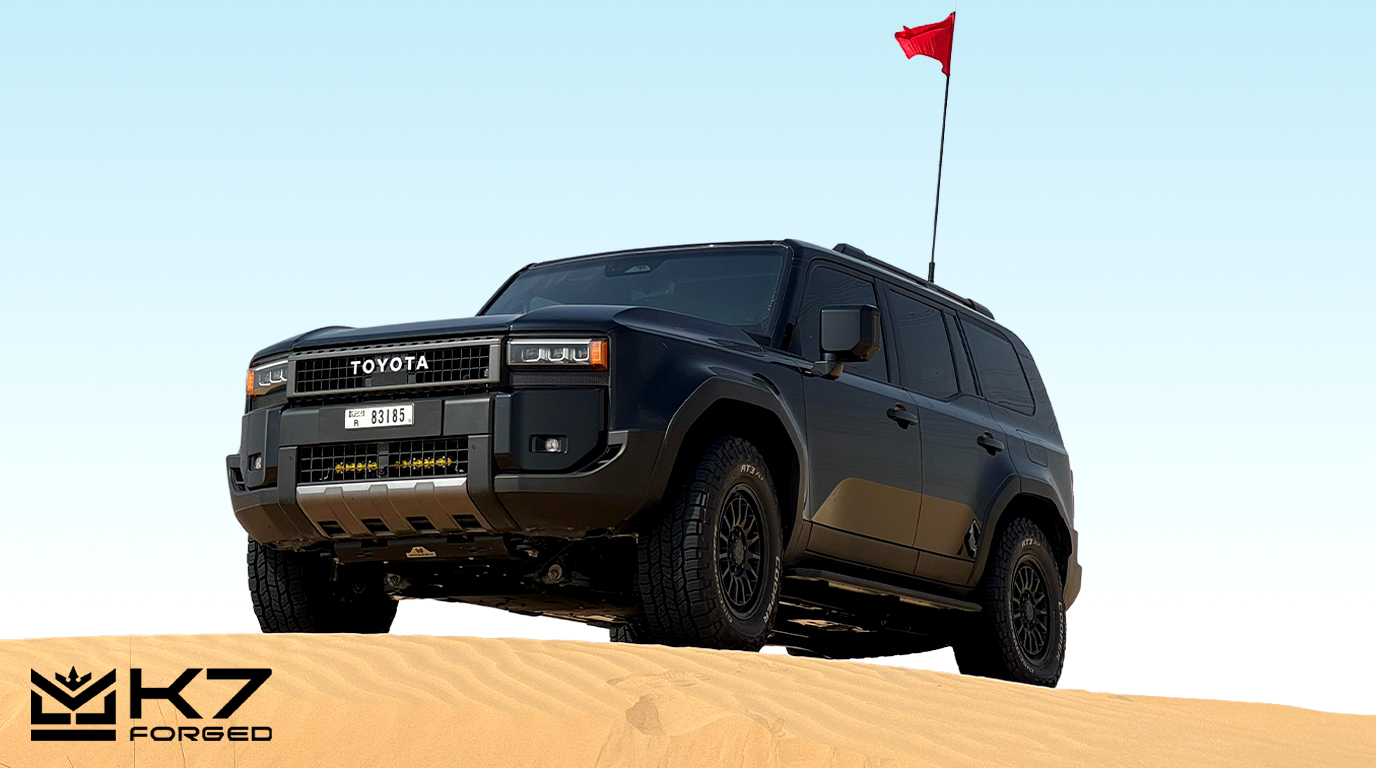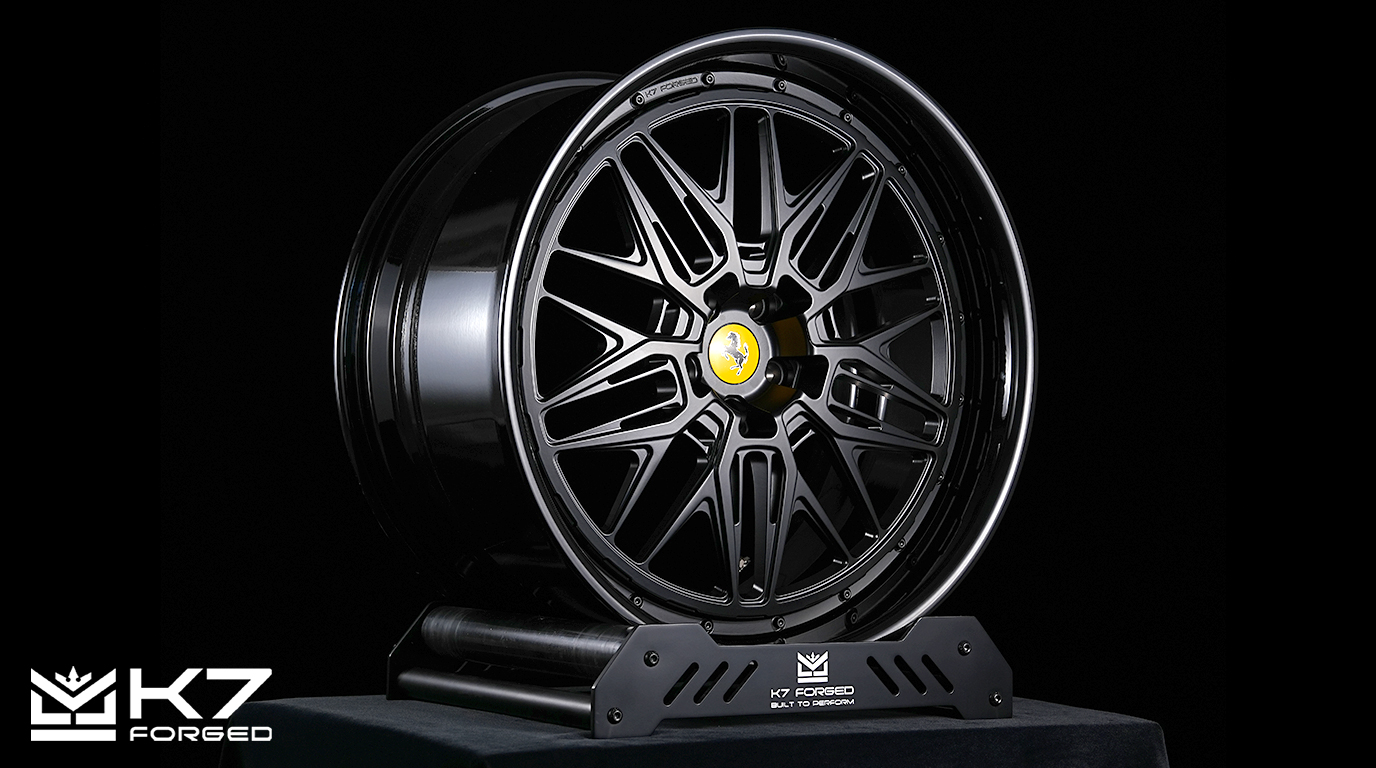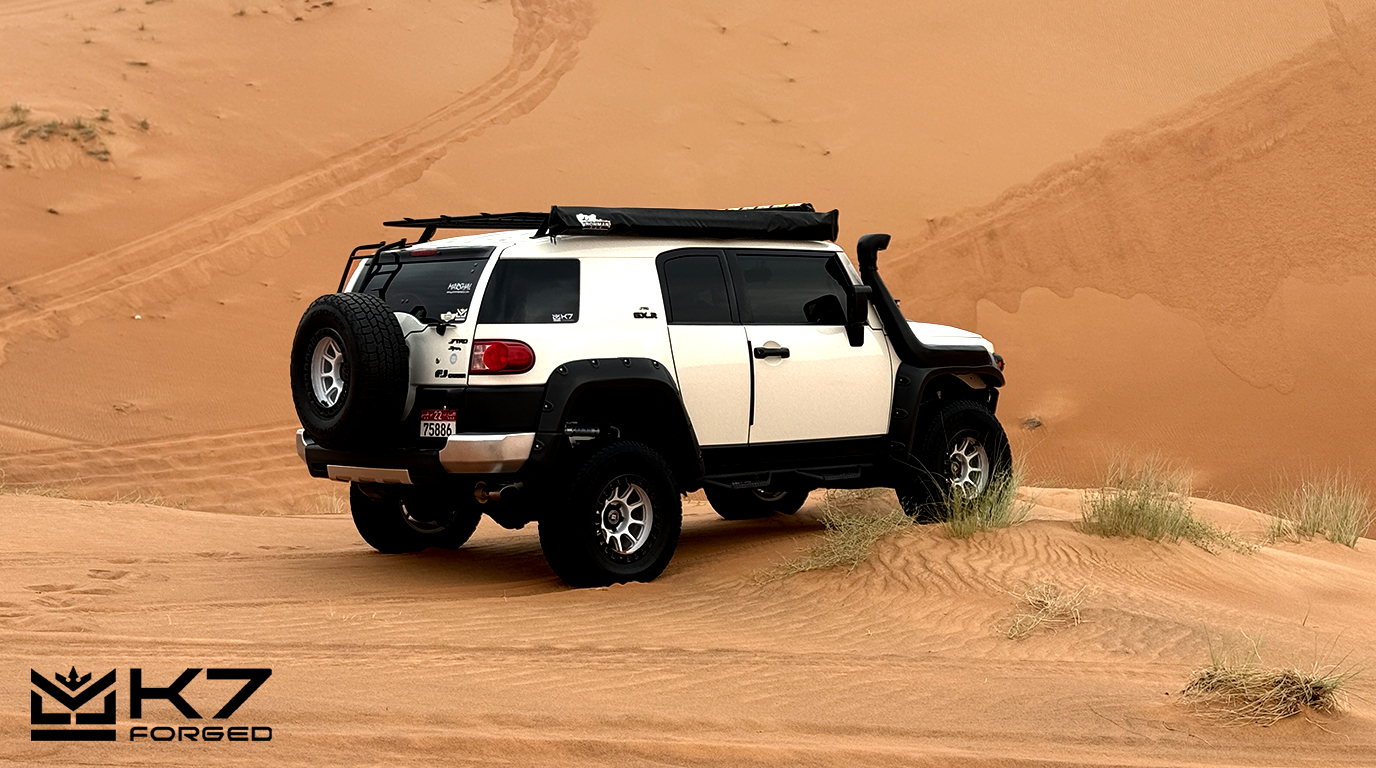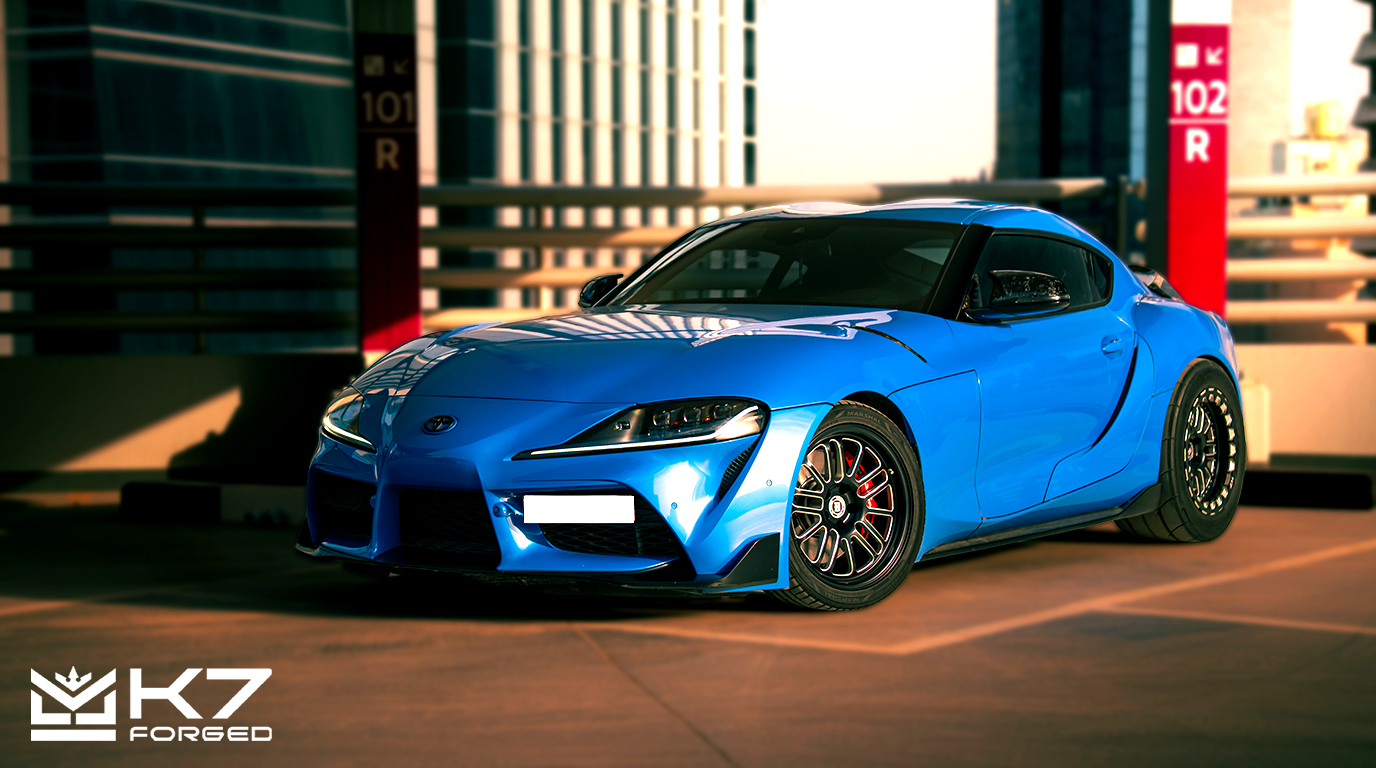
Every week, at least someone contacts K7 Forged asking for the biggest wheel their fender can physically hold. As car enthusiasts, we understand the appeal, since a deep concave 22-inch wheel transforms how a car looks parked outside a Dubai mall. But as one of the top wheel manufacturers, our data tells a more complicated story than most buyers expect, and our customers deserve the full picture before they commit to a size.
Wheels in Dubai and wheels in UAE (in general) face heat, and long highway stretches that make this decision heavier than a style choice.
Key Highlights
● A real VW Golf test found 18 inch wheels beat 19 inch on grip
● Rolling resistance alone eats 4 to 7 percent of a car’s total energy
● Cutting 12 kg of unsprung mass barely changes ride comfort by 1 percent
● Dubai heat and potholes punish oversized wheels faster than cooler climates
● K7 Forged builds each wheel size around the vehicle, not around trends
How wheel size impacts your car (test results)
Car and Driver ran one of the few controlled tests, fitting a 2010 Volkswagen Golf with five wheel sizes from 15 to 19 inches, using matched tires at each size. The result surprised even the testers. Braking and skidpad grip improved from 15 to 18 inches, but the 19-inch setup posted slightly worse skidpad grip than the 18-inch wheel, the opposite of what most buyers assume happens as wheels grow larger.
Acceleration was a predictable story, though. The 0 to 60 mph time slowed from 7.6 seconds on 15-inch wheels to 7.9 seconds on 19-inch wheels, and the gap widened past a full second by 100 mph, based on the original findings published by Car and Driver. Testers ultimately preferred the 17 and 18-inch setups over the largest option on that car.
The physics behind ride comfort claims
Unsprung mass, the weight of the wheel, tire, and brake components the suspension does not support, is where most bigger-wheel marketing breaks down. A peer-reviewed study in the Journal of Sound and Vibration found that a 10 percent reduction in unsprung mass produces roughly a 6 percent reduction in vertical body acceleration under the same wheel-hop conditions, a modest gain to be honest.
An engineering study on composite wheel rims found something buyers should know before paying extra for marginal weight savings. Cutting more than 12 kg of unsprung mass per wheel reduced vertical force oscillation by less than 1 percent, and occupants could not feel the difference at all. Weight has real influence, but past a certain point, the return on comfort flattens out fast.
How much fuel economy bigger wheels really cost
The National Academies of Sciences published a detailed study on tires and fuel economy through the Transportation Research Board, finding that rolling resistance alone consumes 4 to 7 percent of a vehicle’s total energy output, separate from engine and driveline losses.
Larger, heavier wheel and tire packages increase this rolling resistance directly. A 5 to 7 percent cut in rolling resistance yields roughly a 1 percent gain in fuel economy for passenger cars, so the inverse penalty from upsizing runs similarly once wider, heavier tires enter the equation. On an electric vehicle, this penalty shows up as reduced range.
Why Dubai roads punish oversized wheels
UAE summer road surfaces regularly exceed 45°C, and tire pressure climbs by roughly 1 PSI for every 5°C rise in temperature, according to regional tire safety guidance. Low-profile tires on oversized wheels have less air volume and sidewall to absorb that pressure swing, raising blowout risk exactly when Sheikh Zayed Road traffic is heaviest.
Dubai’s RTA and ESMA also require tires to stay within manufacturer specifications unless a modification is formally registered, so an oversized package can create compliance issues at inspection. Pothole and curb strikes hit harder too, since a shorter sidewall cushions less between rim and impact, a problem we see firsthand on wheels arriving at K7 Forged for warranty inspection after Dubai’s summer road damage.
Matching wheel size to your K7 Forged build
K7 Forged makes wheels around the car. A Nissan Patrol or Land Cruiser running our TER Series needs a size that preserves sidewall flex for dune and rock impact, so we rarely recommend anything past what the suspension geometry supports.
A Porsche or BMW owner chasing track precision benefits from our TEC Series in a size that keeps rotational mass low, since every gram at the rim resists acceleration and braking harder than a gram elsewhere.
Luxury SUV owners lean toward larger ELE or VLC Series wheels, where a heavier chassis absorbs added unsprung weight with less penalty than a lightweight sports car feels. We forge every wheel from 6061-T6 aerospace grade aluminum so the size you choose carries as little unnecessary weight as physics allows.
We cover the full pros and cons of sizing up in our guide on bigger versus smaller wheels, and the mileage impact in our piece on alloy wheels and mileage. Our breakdown of how alloy wheels affect comfort and handling and our guide on fitting wider wheels without suspension mods cover the handling side in more depth.
Low profile fitment has its own rules, covered in our guide to finding the right wheel size for low profile tyres, and our checklist on what to verify before buying new rims in Dubai covers load rating math.
Talk to our team before you finalize a size for your build. We will walk you through the load rating, offset, and real-world trade-offs for your specific car, so your wheels in Dubai match your vehicle rather than a trend.
FAQs
Does a bigger wheel always allow a bigger brake upgrade?
Not always, since brake clearance depends on caliper design and offset, not diameter alone.
Can I keep factory ride quality with a one inch wheel upsize?
A one inch upsize with matched tire diameter usually keeps ride quality close to stock.
Do heavier wheels wear out wheel bearings faster?
Yes, added rotational mass and unsprung weight increase long-term stress on bearings and bushings.
Is there a wheel size where handling stops improving?
Yes, testing shows grip gains often plateau or reverse past a certain diameter.
Should EV owners avoid upsizing wheels entirely?
Not entirely, but EV owners should weigh range loss more heavily since rotational mass affects every charge cycle.