Off-road wheels in Dubai take a beating most street wheels rarely face. Dune drops, rock strikes, and sudden pressure changes push a wheel past anything a factory alloy was built for. We wanted to break down what separates a wheel that survives years of desert driving from one that cracks in its first season, using the engineering standards manufacturers test against before a wheel earns the offroad wheels label.
Key Highlights
● Forged 6061-T6 aluminum uses 30 to 35 percent less material than cast wheels
● A pothole hit at speed can triple the effective load on a wheel
● JWL radial fatigue testing runs a wheel through 500,000 rotations
● Beadlock rings hold a tire bead down to 5 PSI, standard wheels need 12
● K7 Forged builds the TER Series around these engineering standards
What makes an off-road wheel strong
Naturally, it’s the choice of material that makes for a wheel’s real-world strength. Forged aluminum uses 30 to 35 percent less material than a cast wheel while ending up stronger, because forging presses the metal into a dense, continuous grain instead of leaving the random porosity that forms when molten aluminum cools in a mold.
Most premium off-road wheels use 6061-T6 aluminum, rated around 45,000 psi tensile strength and 40,000 psi yield strength, tuned for a balance of hardness and ductility. Ductility punches way above its class, since a wheel that bends under a hard rock strike would still be functional, while a brittle wheel can crack on the spot.
How Load Rating math decides whether a wheel survives
Every wheel carries a maximum load rating stamped near the bolt pattern. It’s an easy calculation, though. Take your car’s Gross Axle Weight Rating from the door jamb sticker, use the higher of front or rear, and divide by two. The result tells you the minimum load rating each wheel needs to carry safely. Off-road driving pushes far past this minimum number. Hitting a pothole or rock ledge at highway speed can generate deceleration forces exceeding 3g, which effectively triples the load the wheel absorbs in that instant. This is why experienced off-roaders build in a safety margin well above the minimum GAWR calculation.
The certification tests most buyers don’t know
JWL, the Japan Light Alloy Wheel standard, runs three separate tests before a wheel earns its mark.
1. The radial fatigue test presses a loaded wheel against a rotating drum at 2.25 times its rated load for over 500,000 rotations.
2. The cornering fatigue test tilts and rolls the wheel under lateral load for at least 100,000 rotations.
3. The impact test drops a weighted striker onto the rim at a 13-degree angle from a 230mm height, checking for cracks or air loss.
VIA verifies a manufacturer’s JWL claims through independent third-party testing, and JWL-T extends the standard for trucks and 4x4s, applying a 1.35x cornering factor and a 30-degree drop test built around heavier-duty use.
Why Beadlock Design Changes the Fitment Equation
Standard wheels depend entirely on air pressure to keep a tire bead pressed against the rim. If it drops below roughly 12 PSI for extra traction on soft sand, then the bead can slip under a hard side load, which is a failure called bead unseating.
A true beadlock uses a bolted outer ring, typically secured with 16 to 32 grade-8 bolts torqued between 15 and 25 foot-pounds, that mechanically clamps the bead in place regardless of internal pressure. Safe pressure drops to 5 to 7 PSI with this setup, which falls in line with the range for intense dune and rock crawling. The bolts need re-torquing after initial trail use, since the bead settles and clamping force can shift.
● Standard wheels stay safe down to about 12 PSI before bead slip risk rises
● True beadlock wheels stay safe down to 5 to 7 PSI for technical terrain
● Beadlock-capable differs from true beadlock, so check for the full ring and bolt system
K7 Forged’s TER Series for Real Off-Road Builds
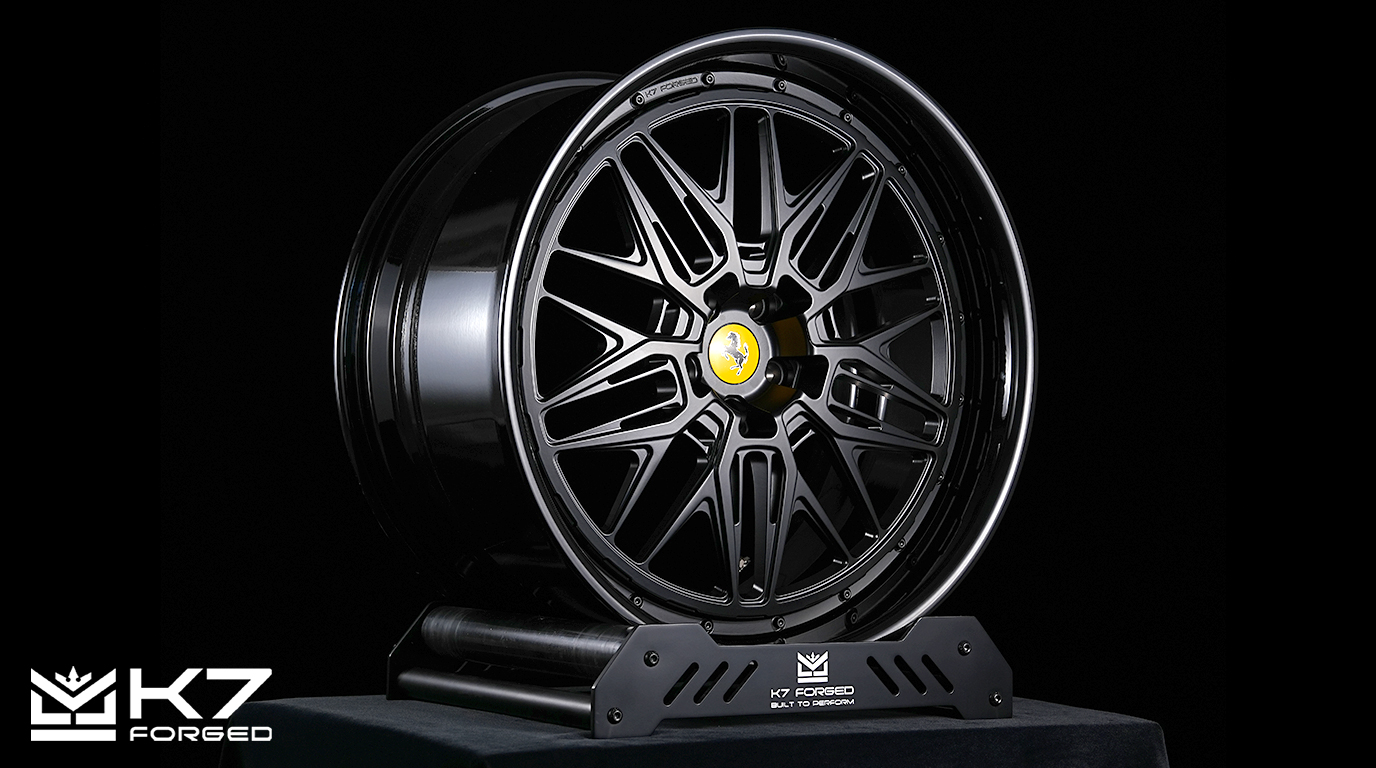
We built the TER Series around these engineering standards instead of a generic size chart. Every TER wheel uses single-piece monoblock forged 6061-T6 construction, available in 5, 6, and 8 lug PCD configurations to match Patrols, Land Cruisers, Jeep Wranglers, and American pickups without spacers.
Models 619 through 625 add true beadlock capability for drivers who air down regularly on dunes, which we mentioned further in our breakdown of the TER-619 beadlock wheel, while other TER models suit mixed highway and light trail use.
Our guide on whether beadlock wheels improve off-road performance covers the pressure and traction trade-offs between the two setups in more depth, and our piece on matching off-road wheel specs to your 4×4 talks about the fitment math for your vehicle.
Every K7 Forged wheel goes through this forged construction and load-rating discipline, which is why enthusiasts researching offroad wheels in Dubai keep landing on the TER Series over generic imports. Owners cross-shopping SUV platforms can see this approach applied in our guide on why K7 off-road wheels are trusted by off-road enthusiasts, and in our piece on the best cars for custom forged wheels in Dubai.
If you finally made up your mind to buy a proper off-road wheel, but you still have doubts about the specifications, like load and terrain demands, send K7 Forged an enquiry, and our team will guide you through load rating, beadlock, and fitment before your custom wheels goes into production.
FAQ
Can a cracked cast wheel be repaired the way a bent forged wheel can?
No, a bent forged wheel can often be straightened within safe limits, while a cracked cast wheel usually needs full replacement.
Does a higher load rating always mean a heavier wheel?
Not always, since forged construction can raise load capacity without adding proportional weight.
How often should beadlock bolts be checked after installation?
Check torque after the first trail outing and periodically after hard off-road use.
Is JWL certification required for wheels sold in the UAE?
JWL is not legally mandated in the UAE, but it remains the most referenced independent testing standard in the region.
Can I mix a beadlock wheel with a non-beadlock spare?
Yes, though the spare will have a higher safe minimum pressure than the beadlock-equipped wheels.